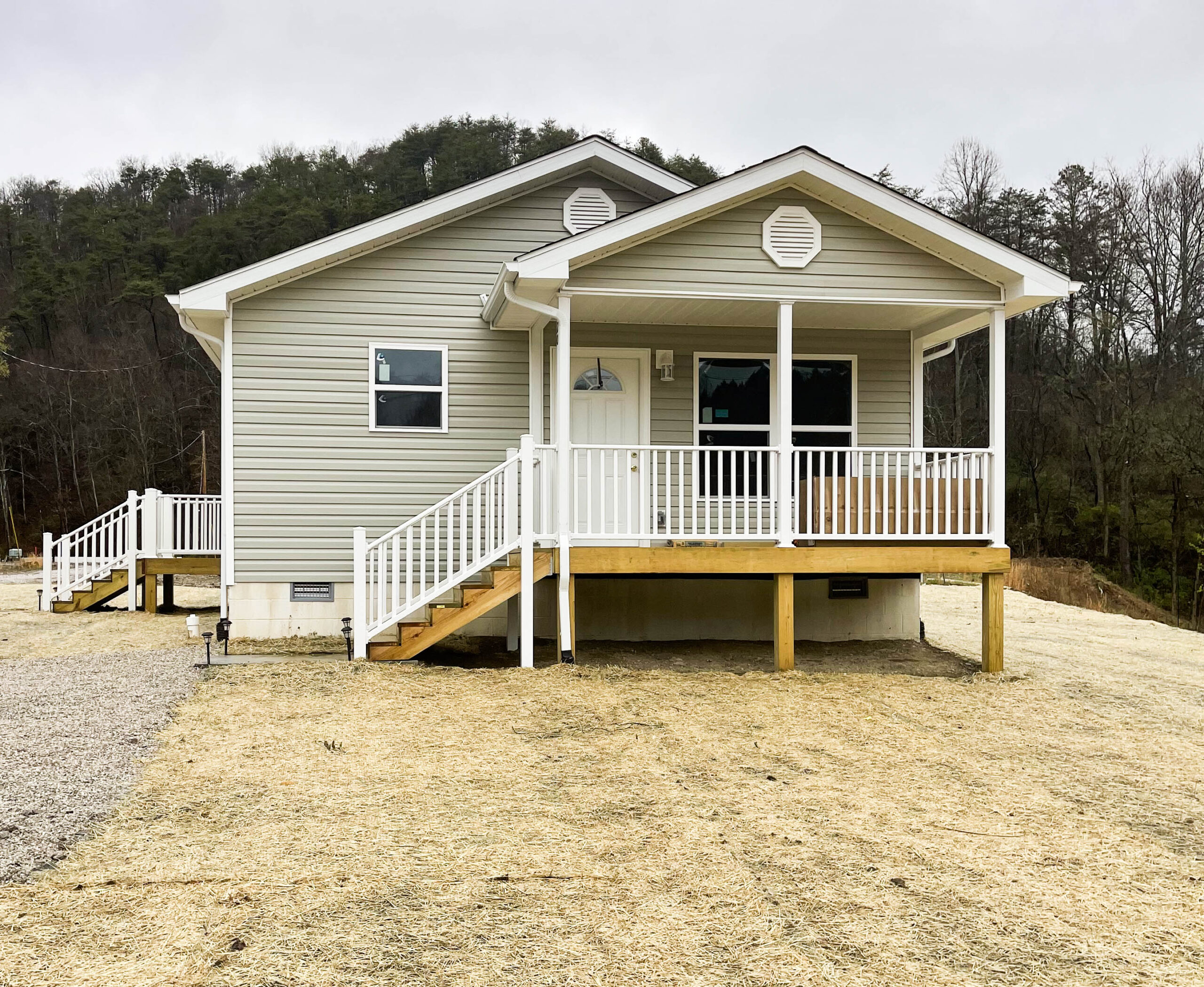
Above: Houses built by HDA at Gurney’s Bend
Photo courtesy of Coalfields Media
At HDA, every home we build is designed to be durable, energy-efficient, and affordable for the families who live in them. While no two HDA homes are exactly alike, all of our floor plans are created with the same goal: helping households become successful homeowners for the long haul.
We build homes of varying sizes, layouts, and styles, and homeowners are able to personalize many finishes – such as colors, flooring, and fixtures – depending on the project and funding source. Most importantly, every home is designed to stay within a household’s approved budget and mortgage limits.
Explore our floor plans below to see what HDA homes look like and to start imagining what home could look like for you.
Every HDA home is constructed by our professional building crew using high-quality materials and modern building practices. All homes meet strict energy-efficiency standards and are ENERGY STAR® certified.
On average, families living in HDA homes save more than $900 per year on utility costs, helping make homeownership more affordable month after month.
Our floor plans are our starting point – not a one-size-fits-all solution.
Most plans can be modified slightly to meet household needs
In limited cases, plans may be customized, especially to accommodate accessibility or disability-related needs
Older or non-active plans may still be used in specific situations
These are HDA’s most commonly built, income-qualified home designs. Homes are grouped by housing tier, which reflects household income ranges and helps ensure long-term affordability.
What does “tier” mean?
In affordable homeownership, housing tiers are used to match home size and cost to a household’s income level. This approach helps ensure homes remain affordable for both current and future homeowners.
This work is supported by the Department of Energy, Office of Energy Efficiency and Renewable Energy (EERE) under the State Energy Program Award Number DE-SE0001088 through the Energy and Environment Cabinet, Office of Energy Policy.

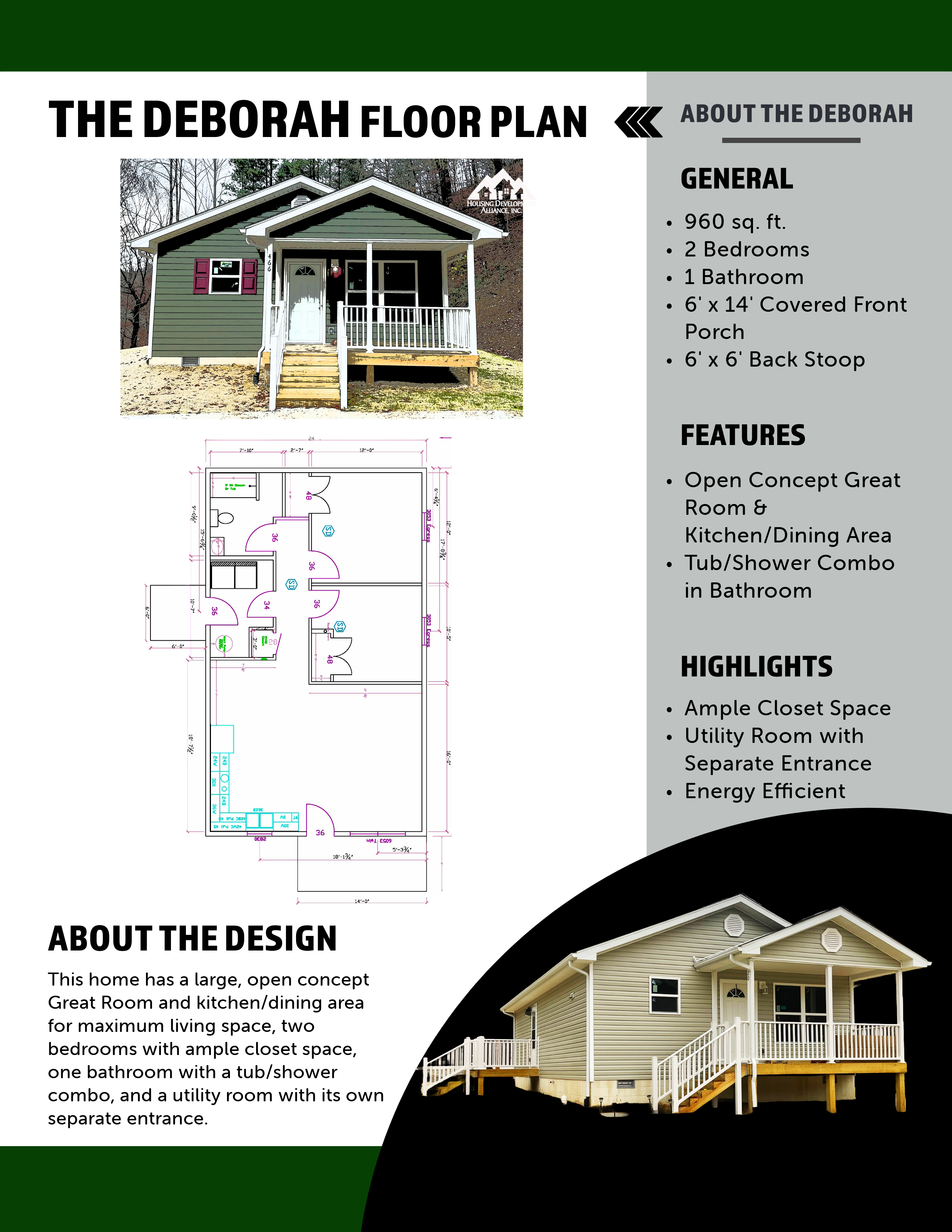
A compact home with a large great room and combined kitchen/dining area. Includes two bedrooms and a centrally located bathroom with tub/shower. Features a dedicated utility room and efficient use of space throughout.
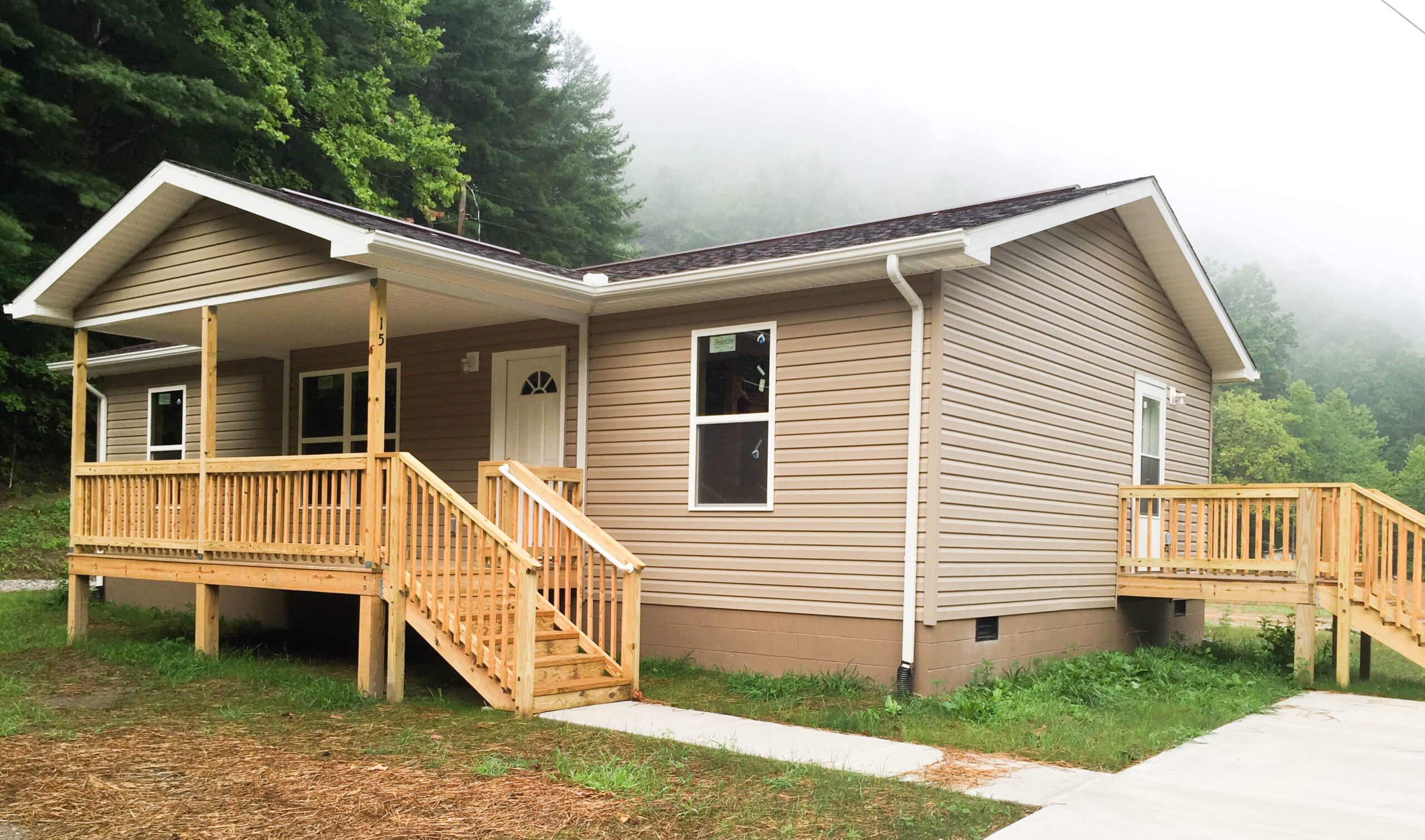
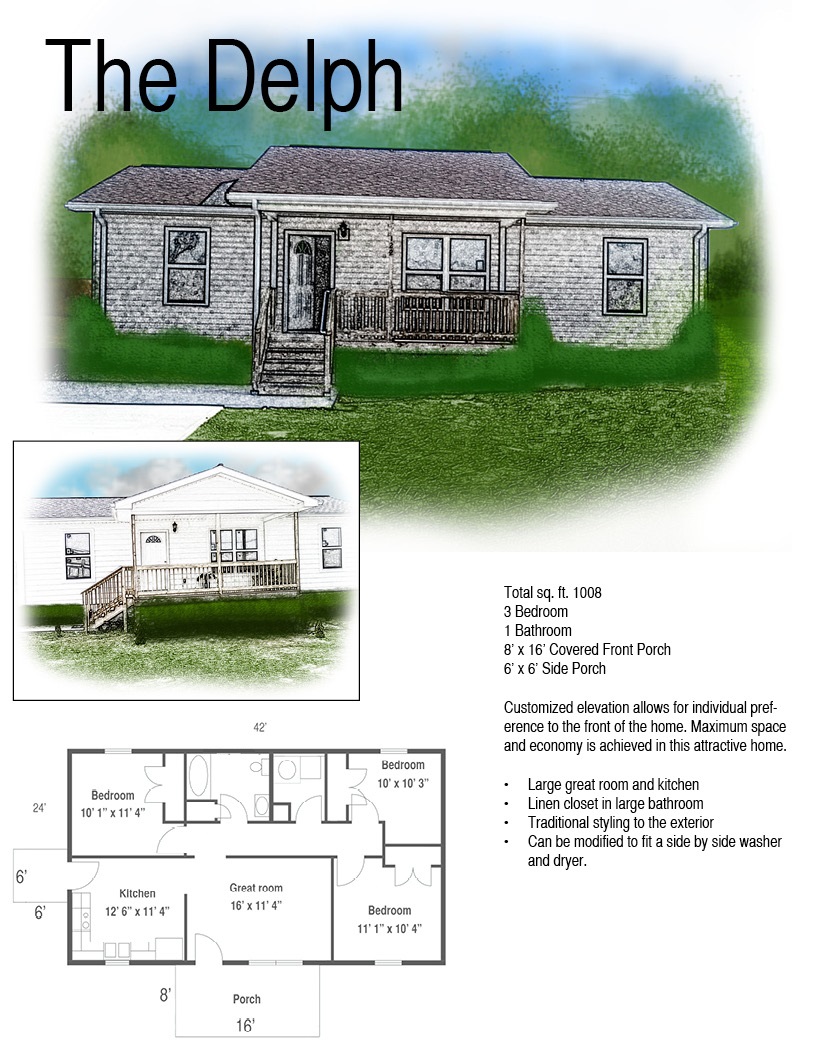
A thoughtfully designed small home that maximizes shared living space. The open kitchen and great room create a comfortable gathering area, with bedrooms arranged for efficiency and ease of access.
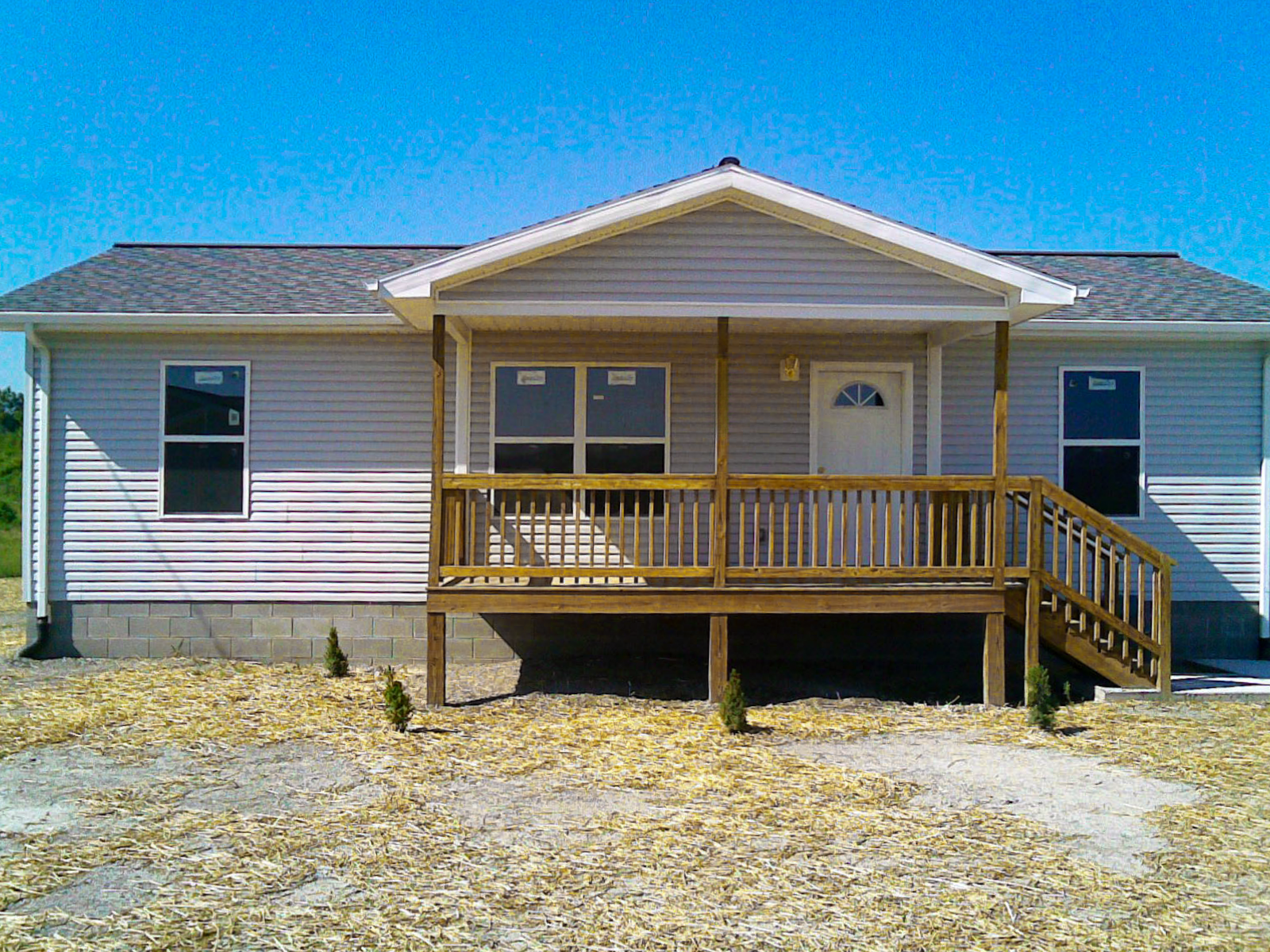
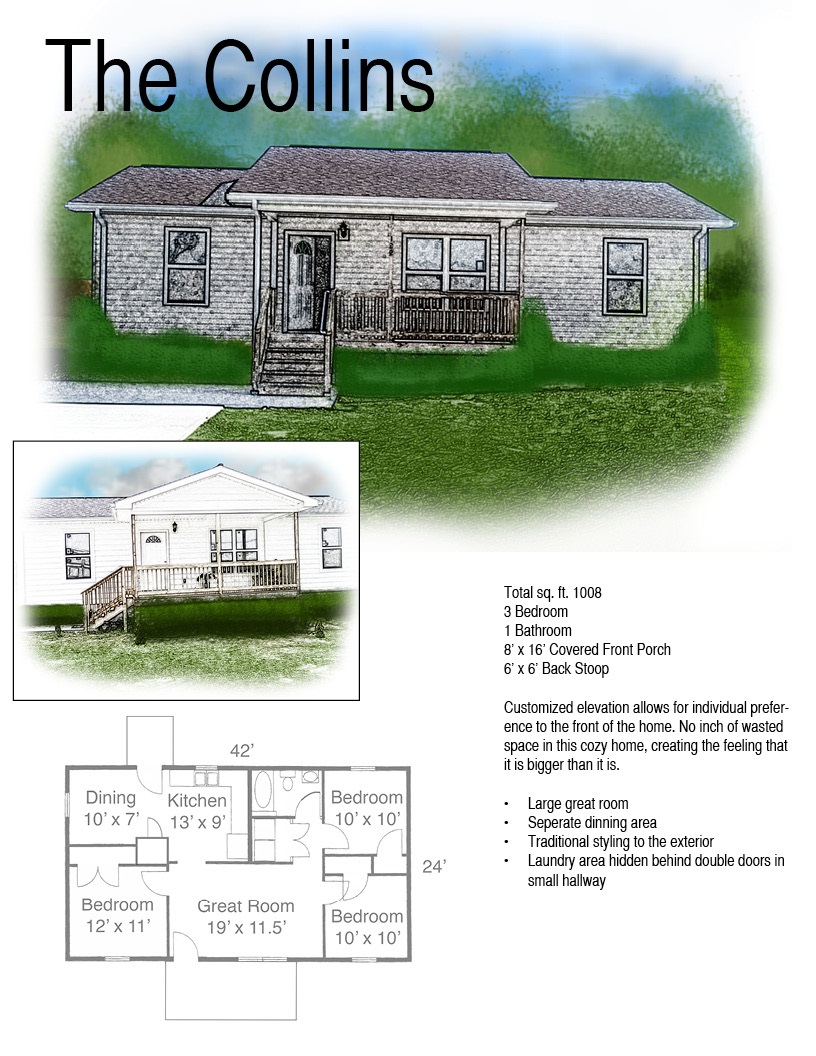
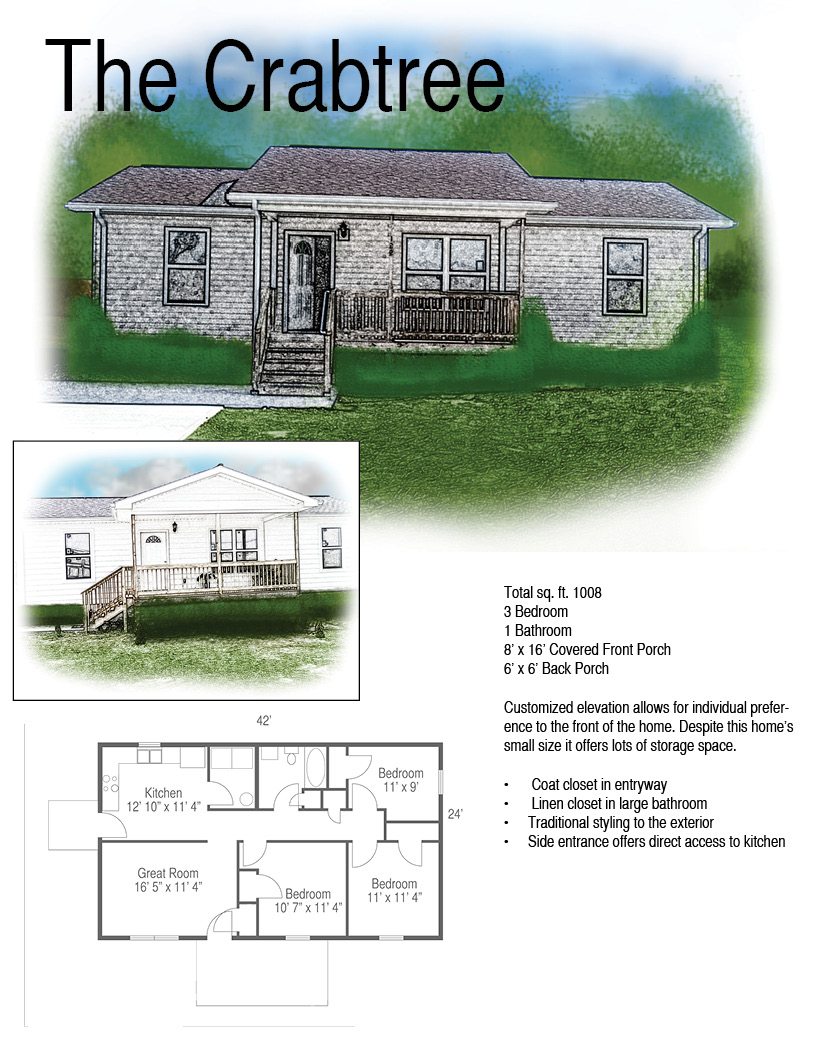
A modest-sized home with flexible exterior elevations for visual variety. Despite its footprint, the layout prioritizes storage and practical living areas.

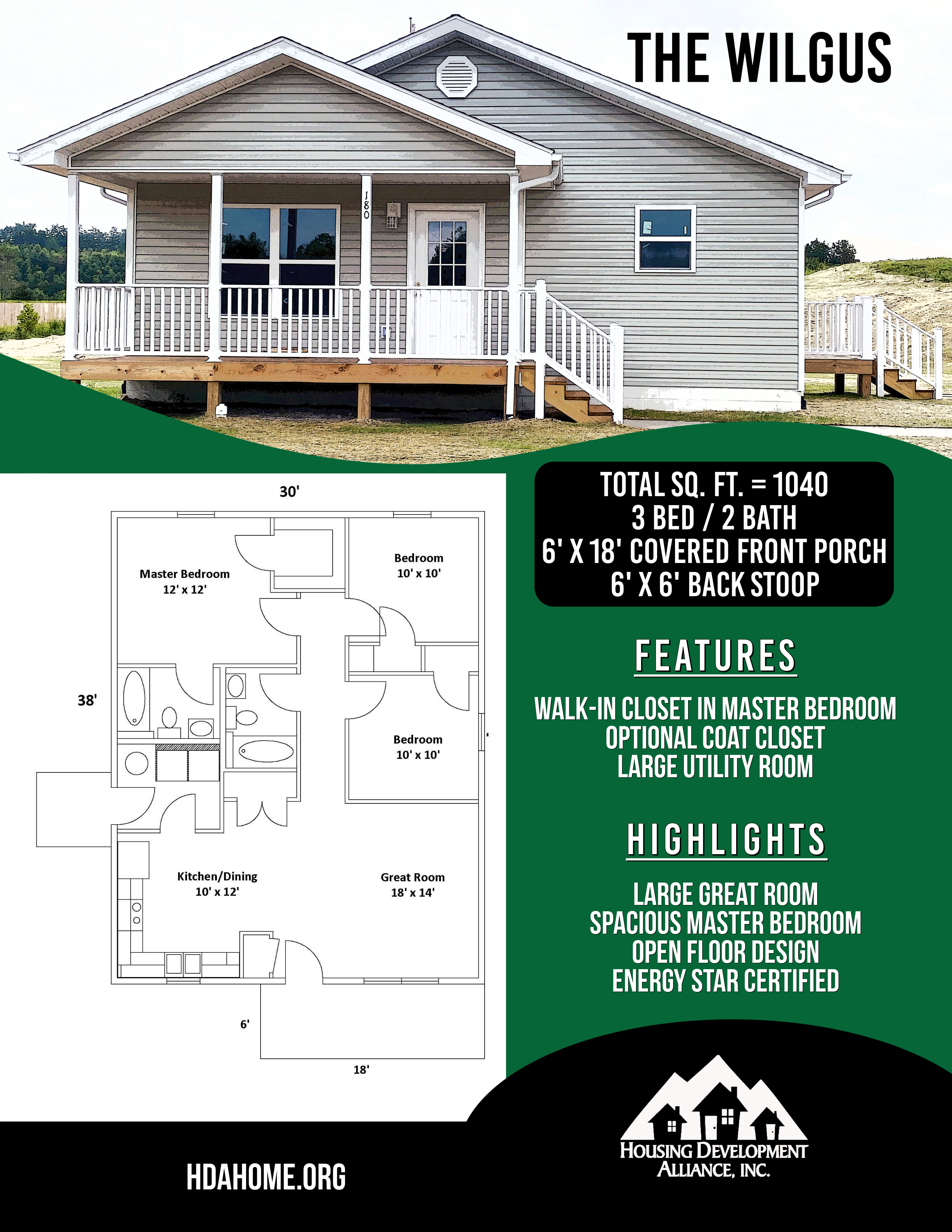
This modest floor plan makes use of every square foot! It features a spacious great room, large kitchen, a large full bath, and roomy closets.

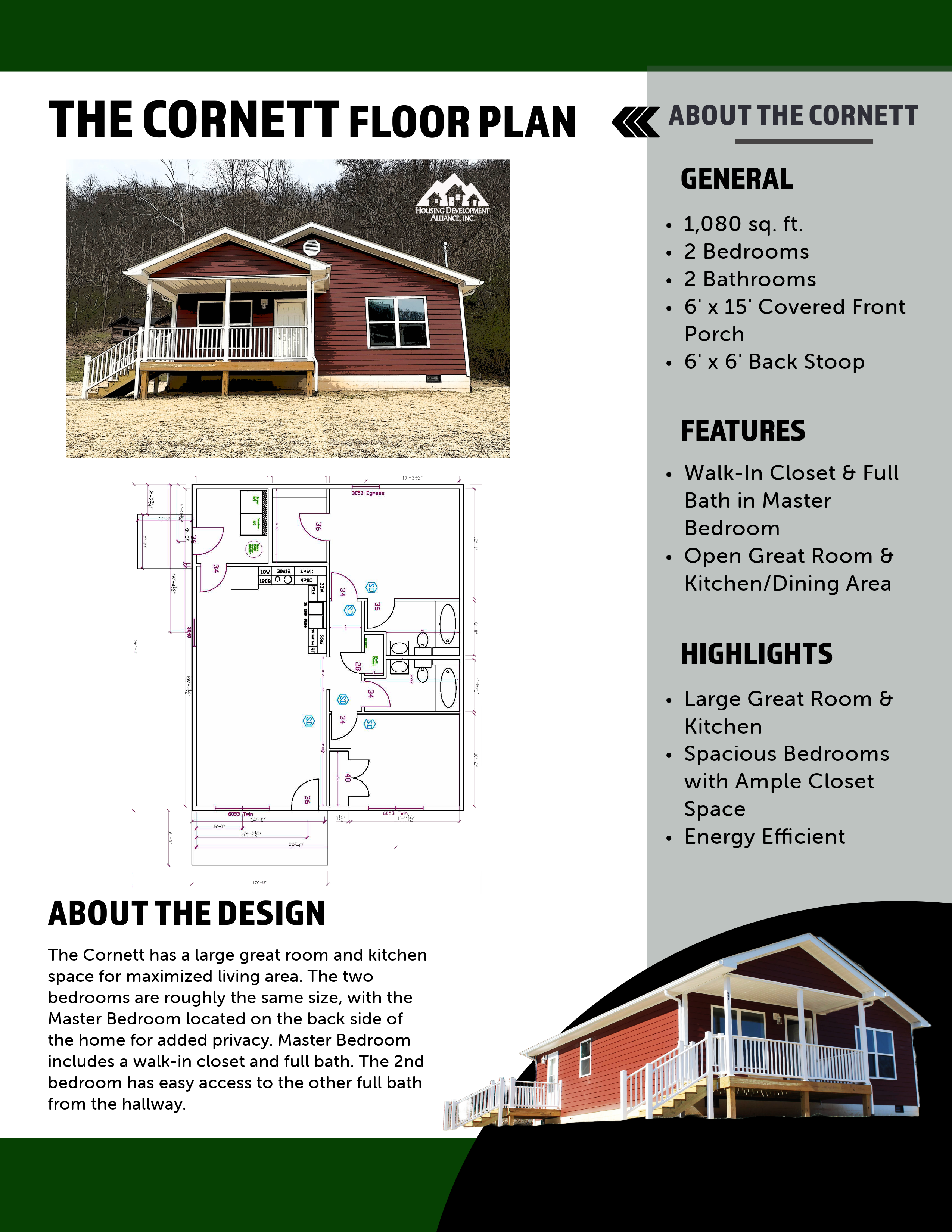
An open great room and kitchen anchor this well-balanced layout. Bedrooms are similar in size, with the primary suite positioned at the rear for added privacy and a walk-in closet with full bath.
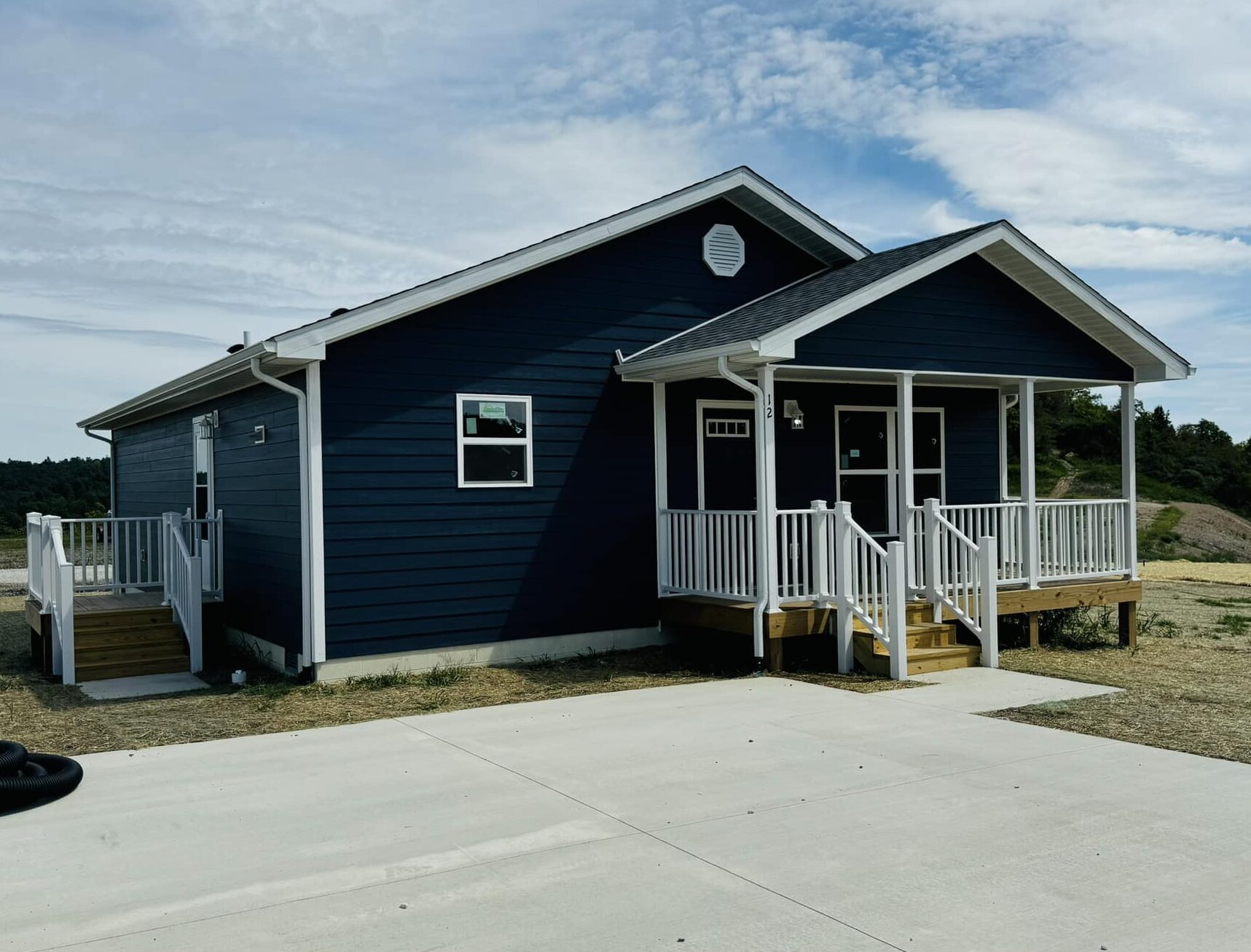
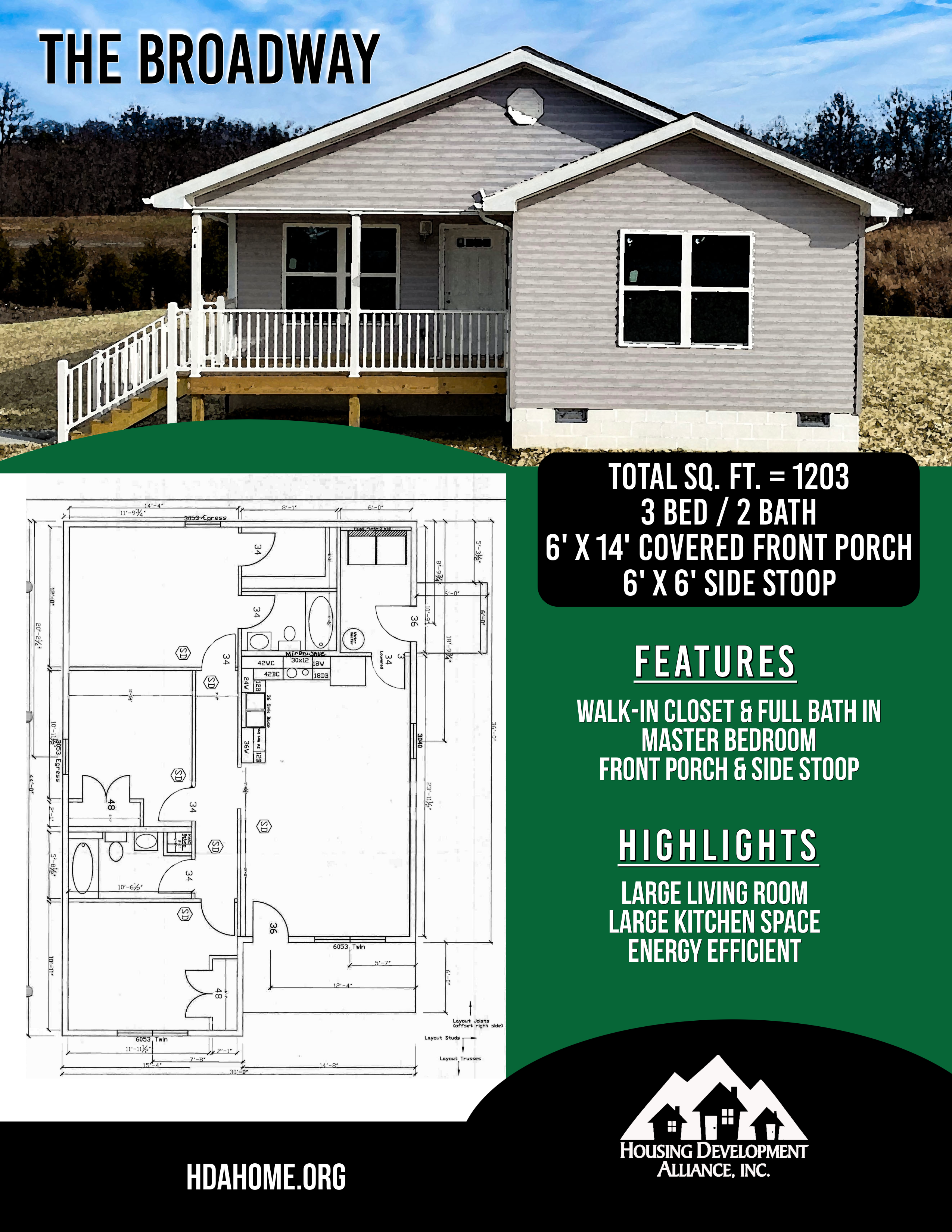
Designed with separation between the primary suite and secondary bedrooms. Includes a covered front porch and side stoop, with an efficient layout that supports both privacy and shared living.

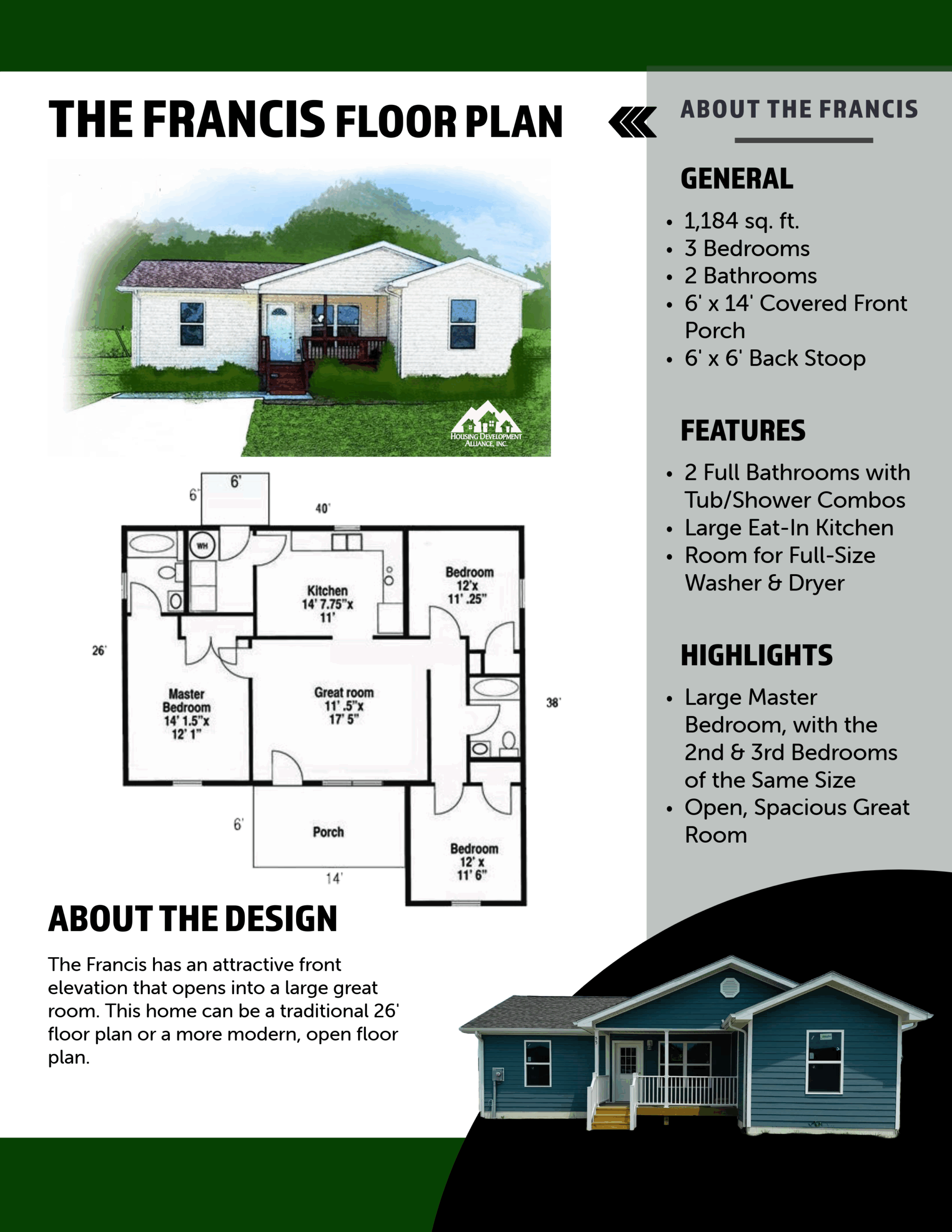
Features a welcoming front elevation that opens into a large great room. Available in a traditional or more open floor plan configuration, allowing flexibility in layout.
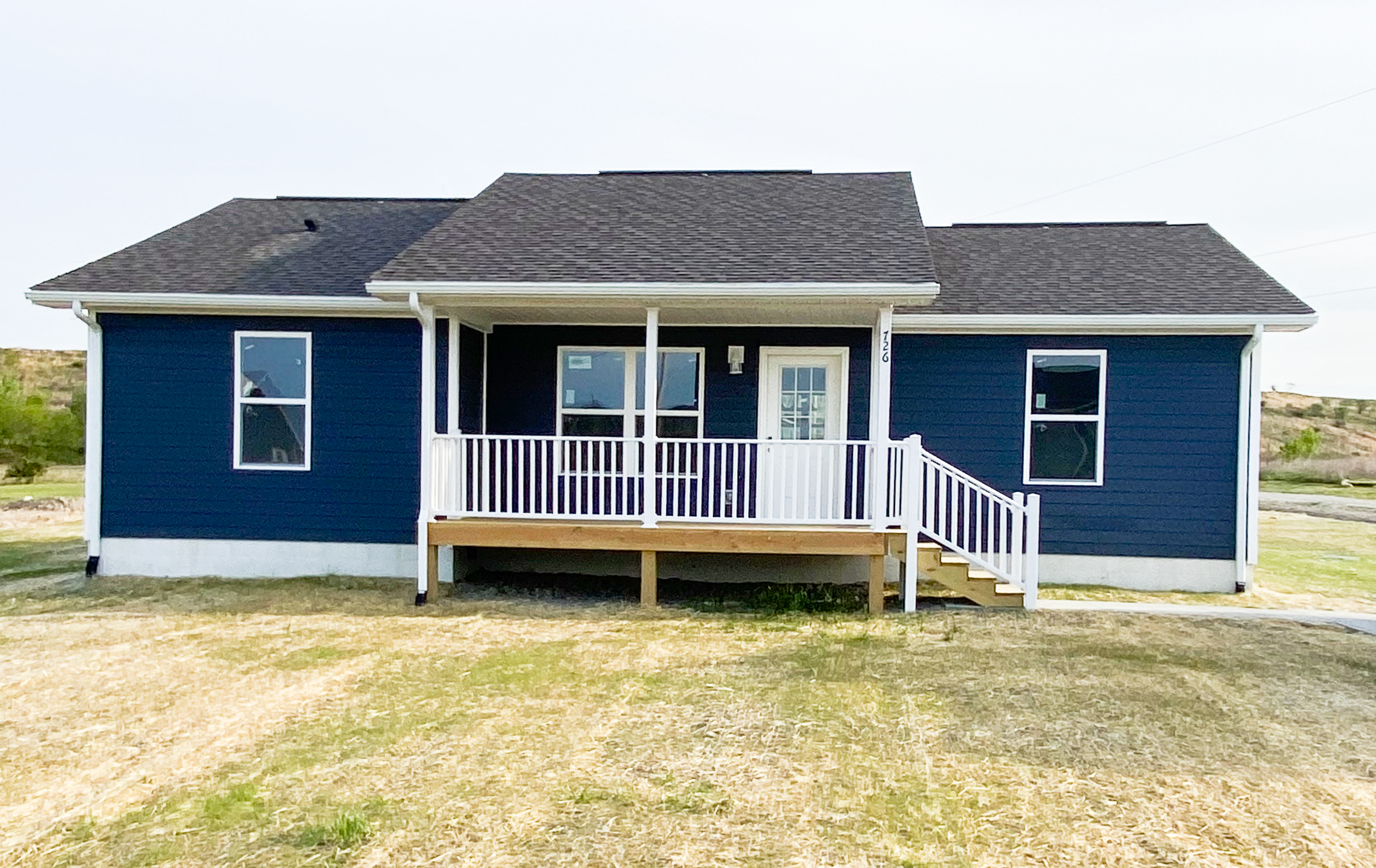
An open living space with minimal hallway square footage to maximize usable areas. The layout emphasizes a spacious primary bedroom and central great room.
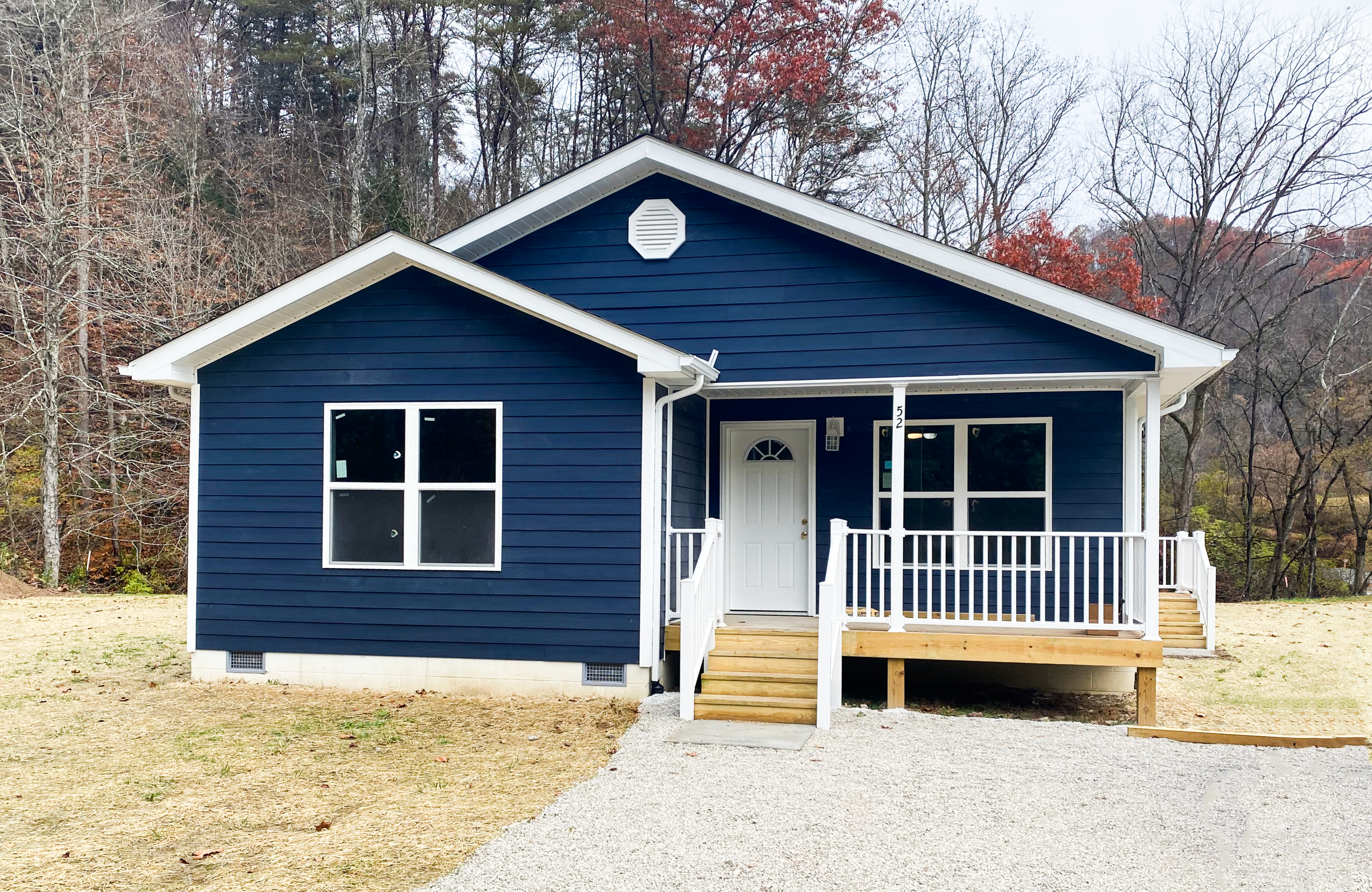
A popular plan with a large living room and kitchen area. Bedrooms are located on the same side of the home, with a primary suite that includes a walk-in closet and full bath, plus a modest front porch.

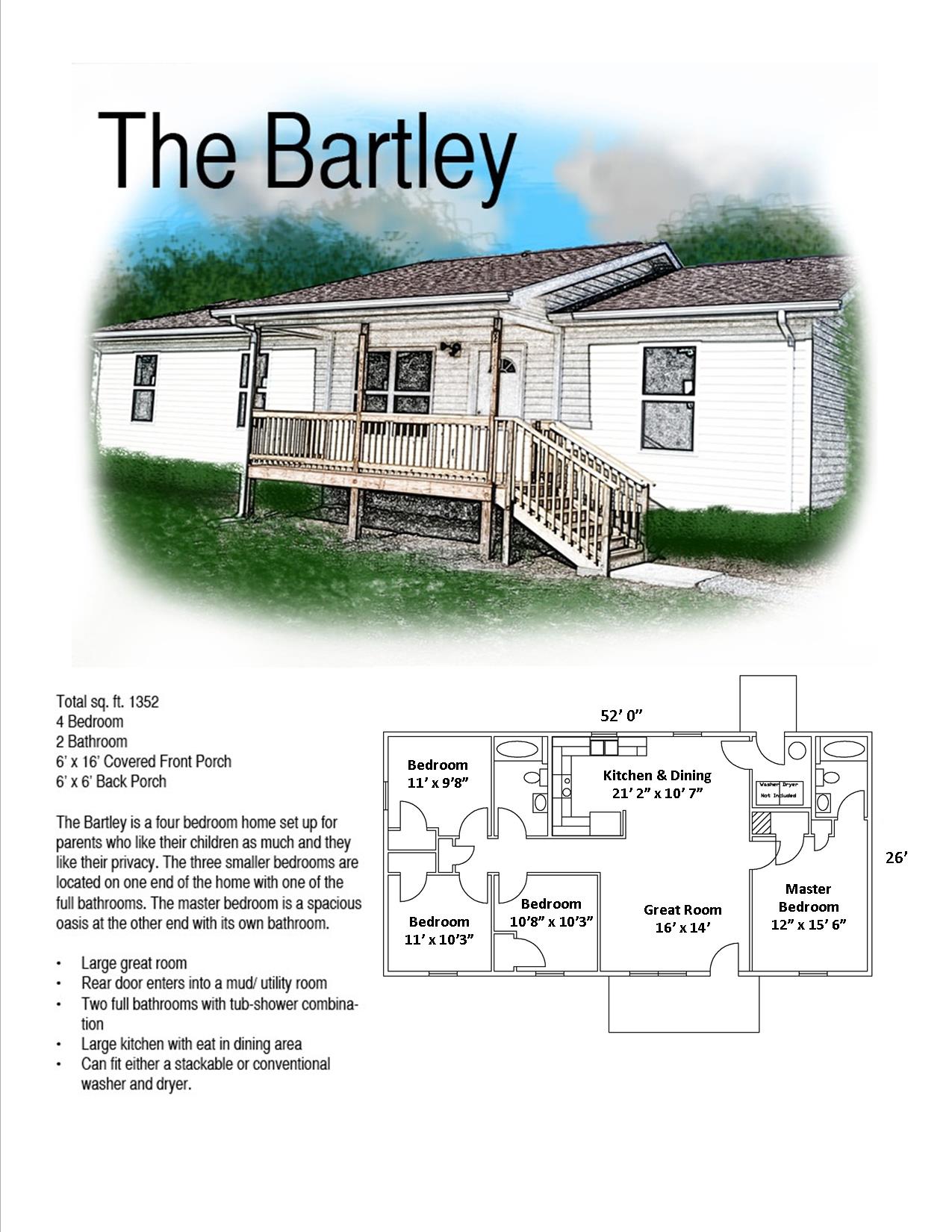
Designed to balance shared space with bedroom privacy. Three secondary bedrooms and a full bath are grouped on one end of the home, with a spacious primary suite located separately.
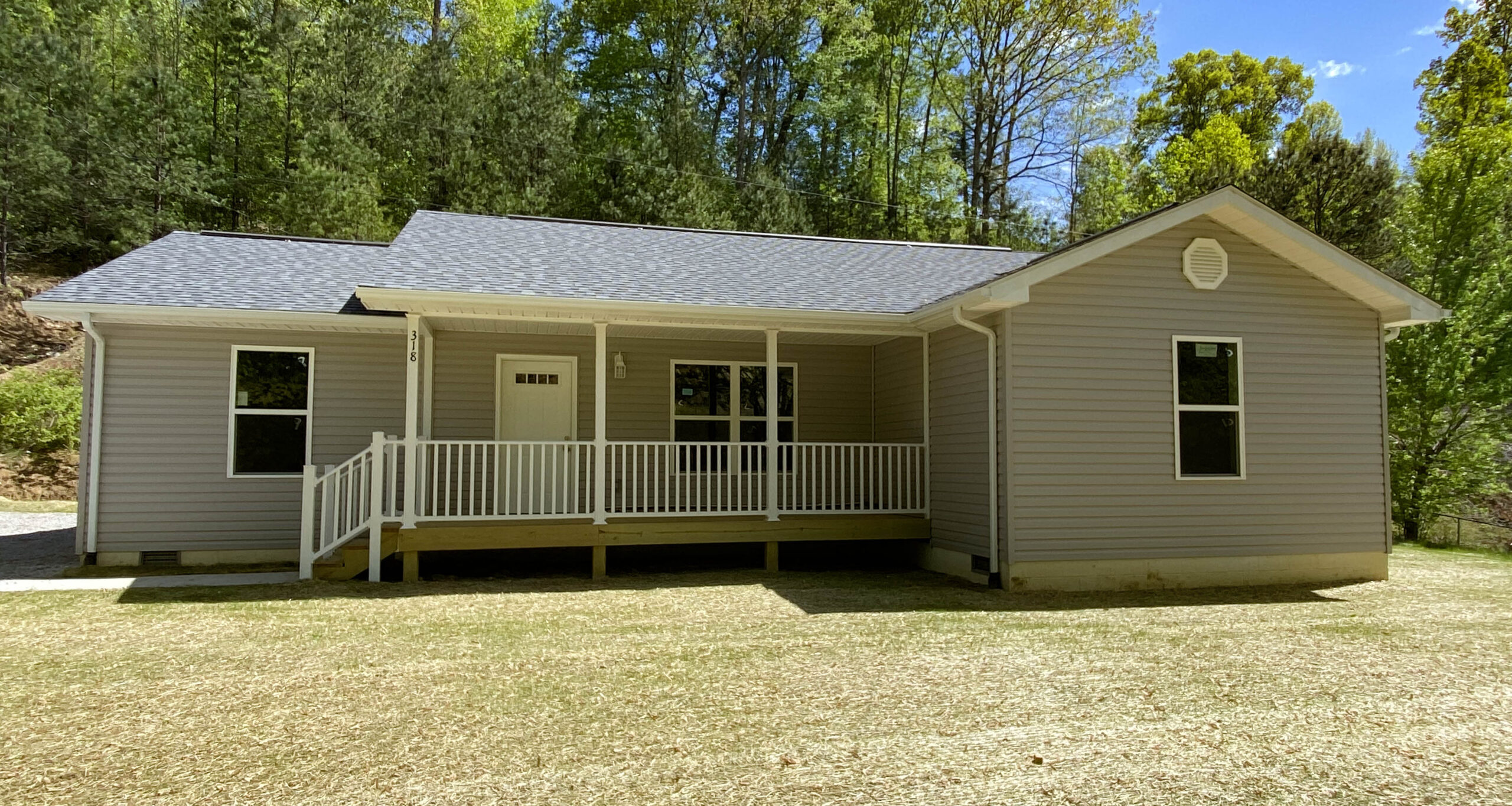
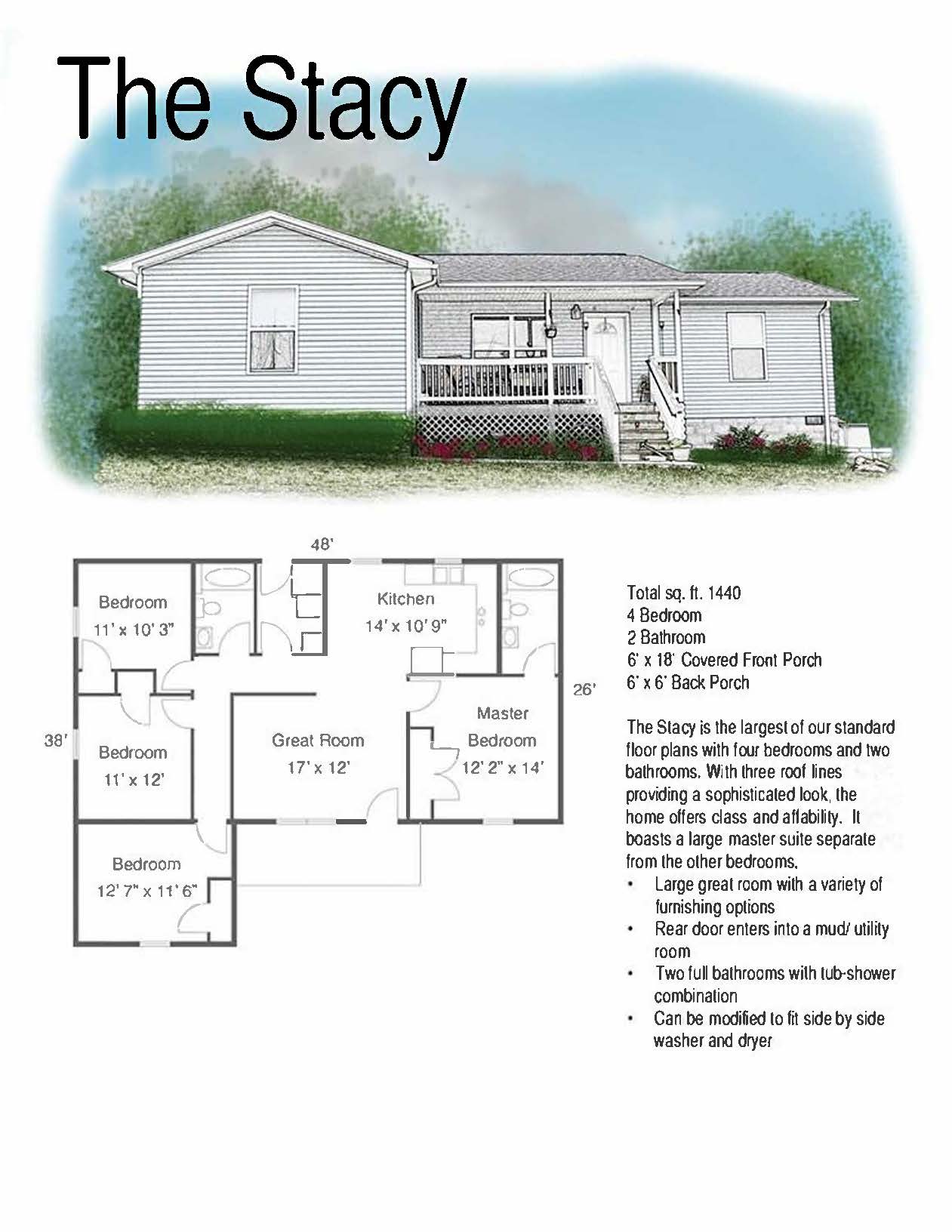
An open-concept design connecting the great room and kitchen/dining area. This larger plan features four bedrooms, two bathrooms, and a primary suite set apart from the others.
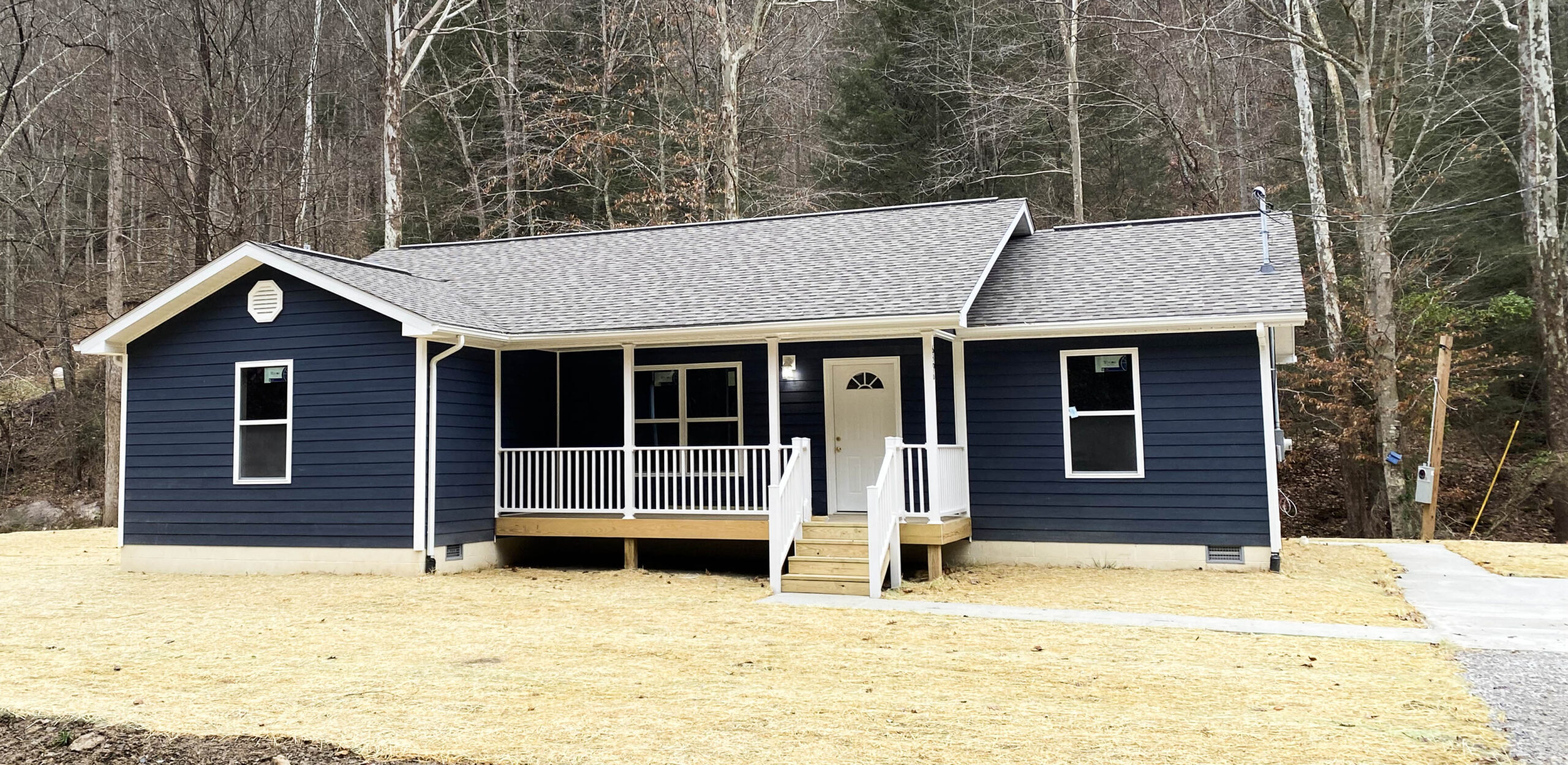
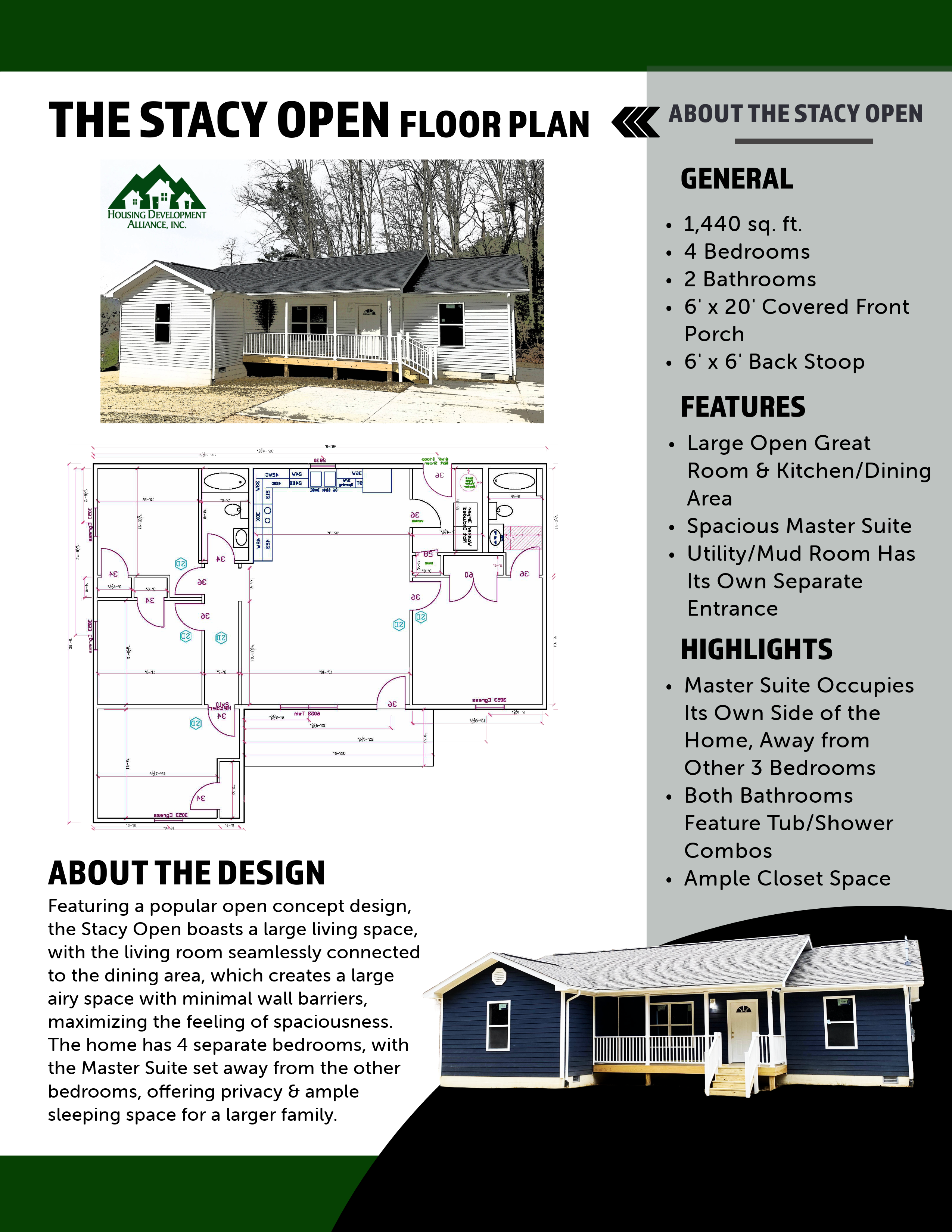
An expanded open-concept version of the Stacy with fewer interior walls. Designed to create an airy living space while maintaining bedroom separation for privacy.
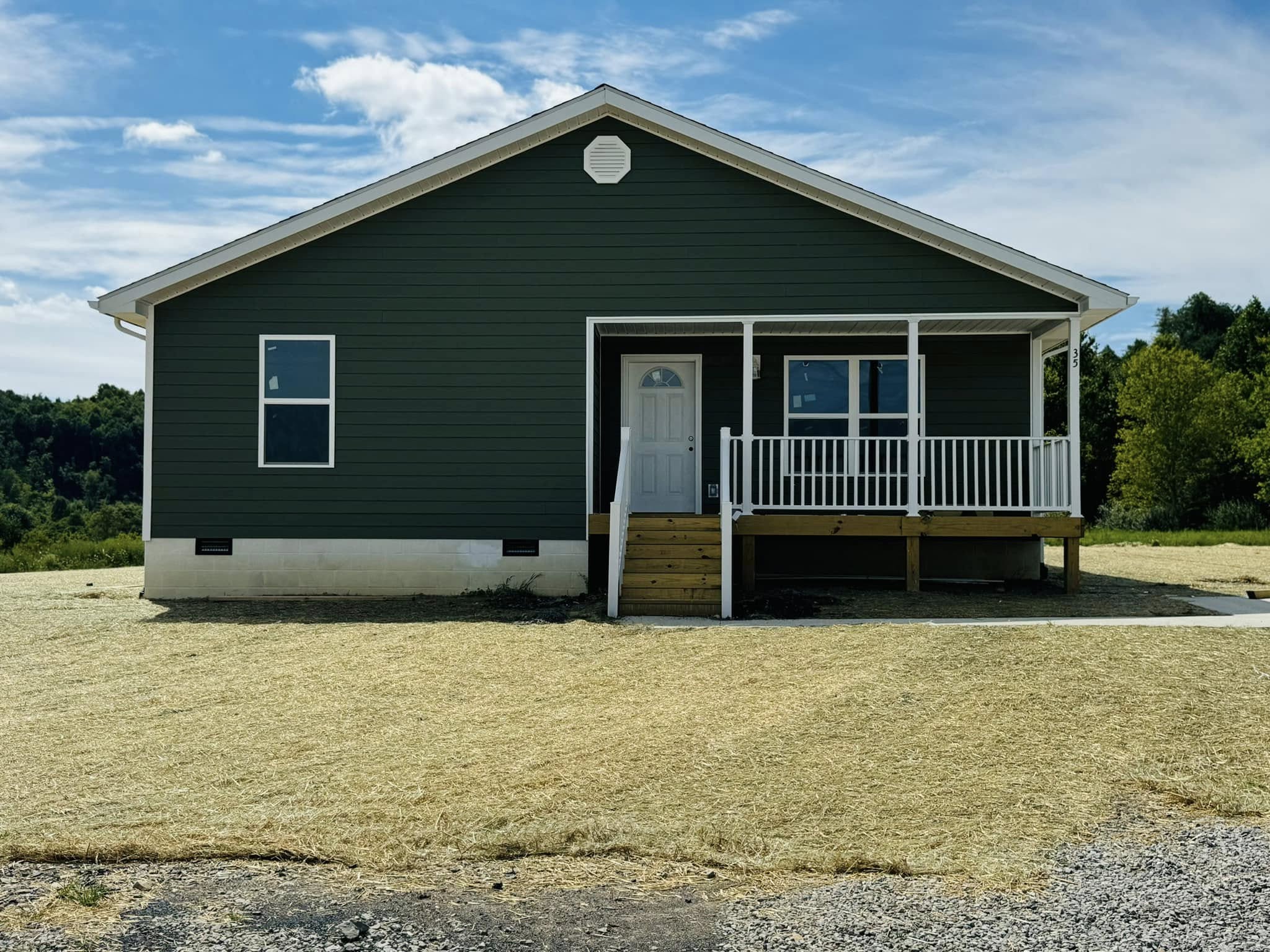
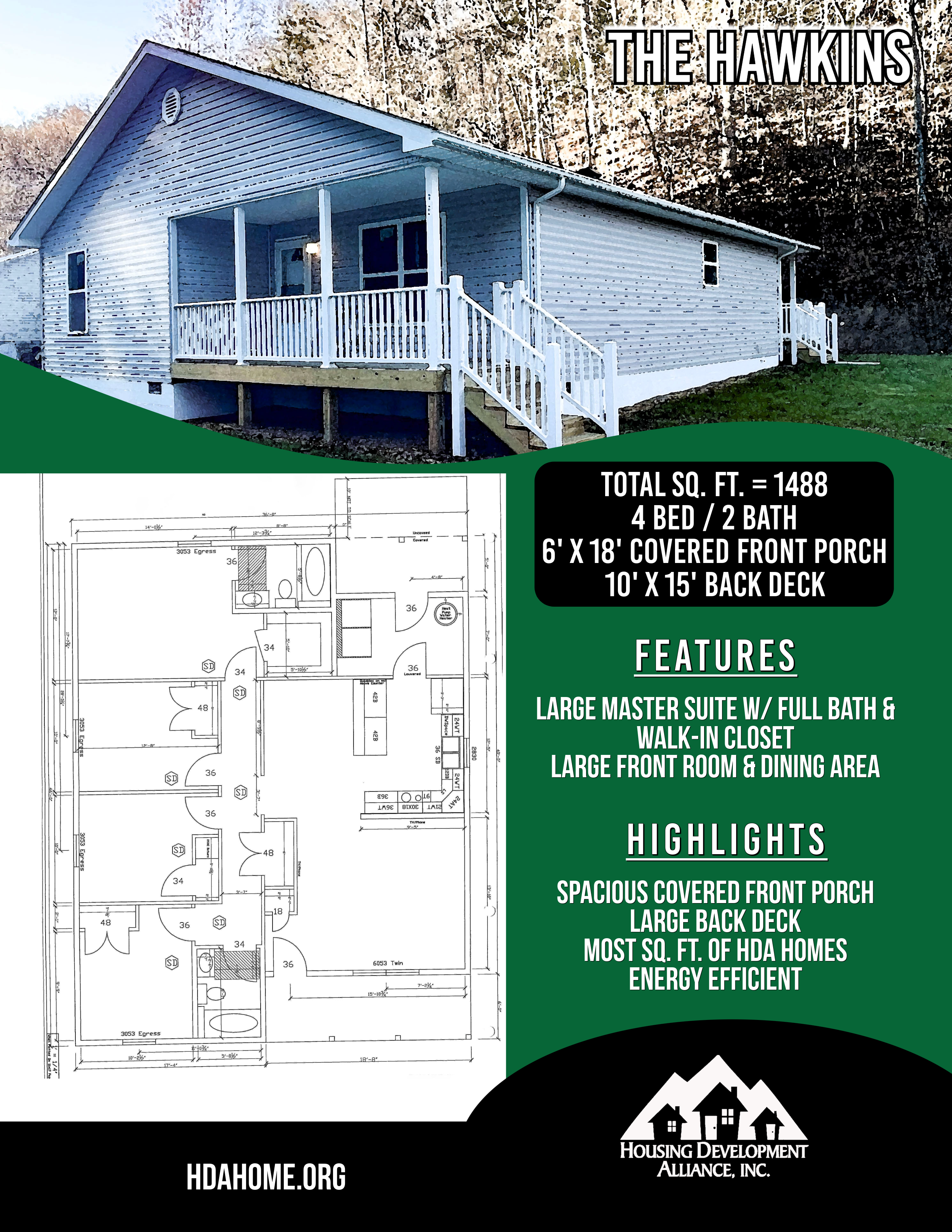
The largest of HDA’s standard single-story plans. Includes a spacious primary suite, a large front living room, dedicated dining area, front porch, and (optional) rear deck.
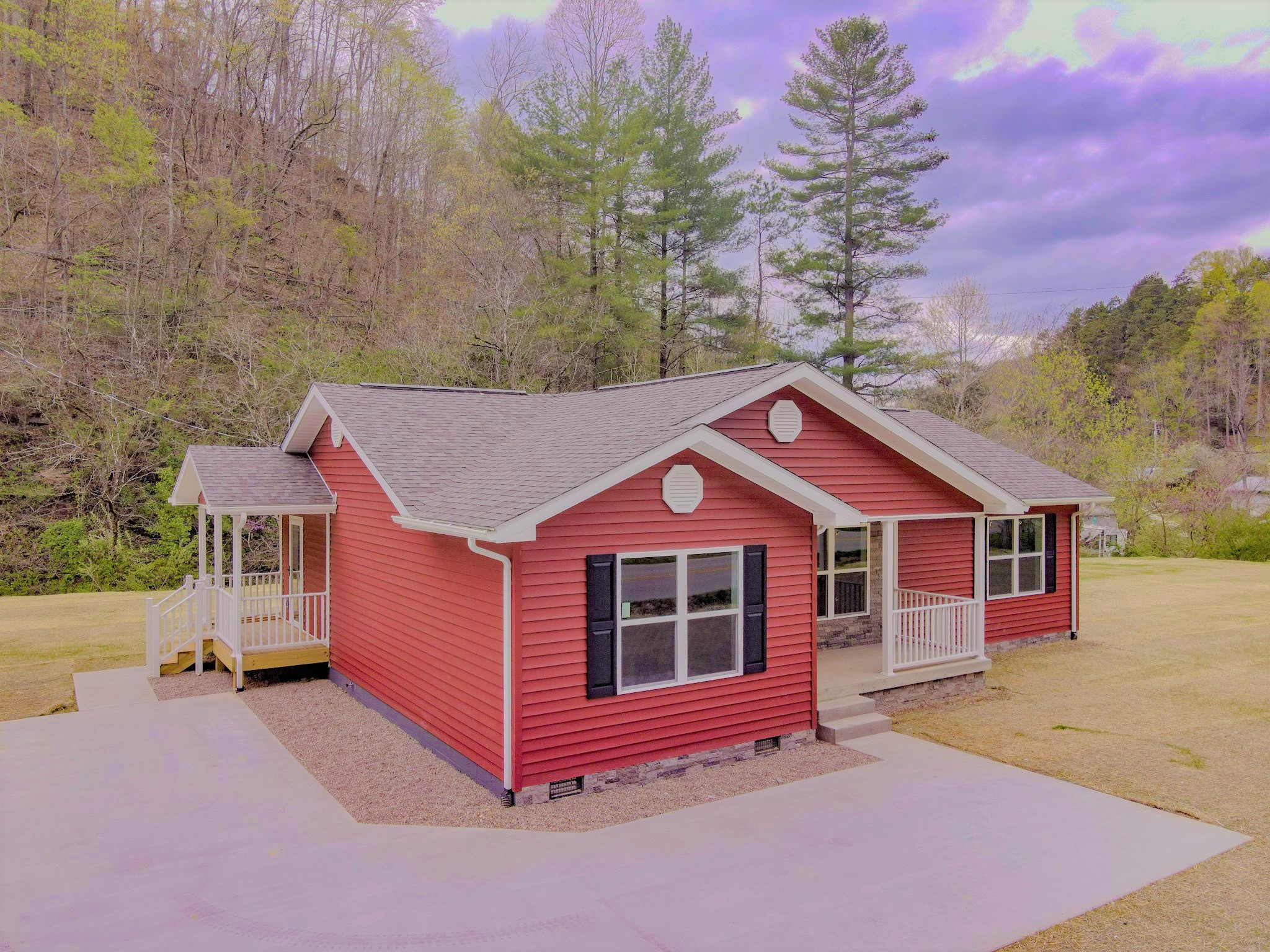
Some homes are built for households who exceed income limits for HDA’s traditional programs. These homes are constructed by our Hope Building crew and are typically sold on the open market.
Because these homes often include additional square footage or features, they generally have a higher sales price and are built in smaller numbers.
A larger open-concept home built by HDA’s Hope Building crew. Features a cathedral ceiling in the great room, kitchen island, spacious primary suite, pantry/laundry room, and optional two-car garage. Typically built less frequently and sold on the open market. Get more info on homes built by Hope Building here!
In response to historic flooding in Eastern Kentucky, the state identified several high-ground sites for new residential development. These communities are designed to provide safe, resilient housing for flood-impacted households.
HDA builds homes at multiple high-ground sites in partnership with other nonprofit builders.
Chestnut Ridge is a planned residential community located above the floodplain in Leburn, KY. The site spans more than 100 acres and will include approximately 147 homes, walking trails, and outdoor recreation areas.
Flood-impacted households from the 2022 and 2025 floods receive priority access.
Contact us at julia@hdahome.org or 606-436-0497, or complete Fahe’s Housing Can’t Wait Interest Form.
Link to Interest FormLocated just five miles from downtown Hazard, Skyview Estates is a 50-acre high-ground development with up to 96 single-family homes planned for homeownership.
HDA has begun construction and will continue building homes in phases.
Contact us at julia@hdahome.org or 606-436-0497, or complete Fahe’s Housing Can’t Wait Interest Form.
Link to Interest Form
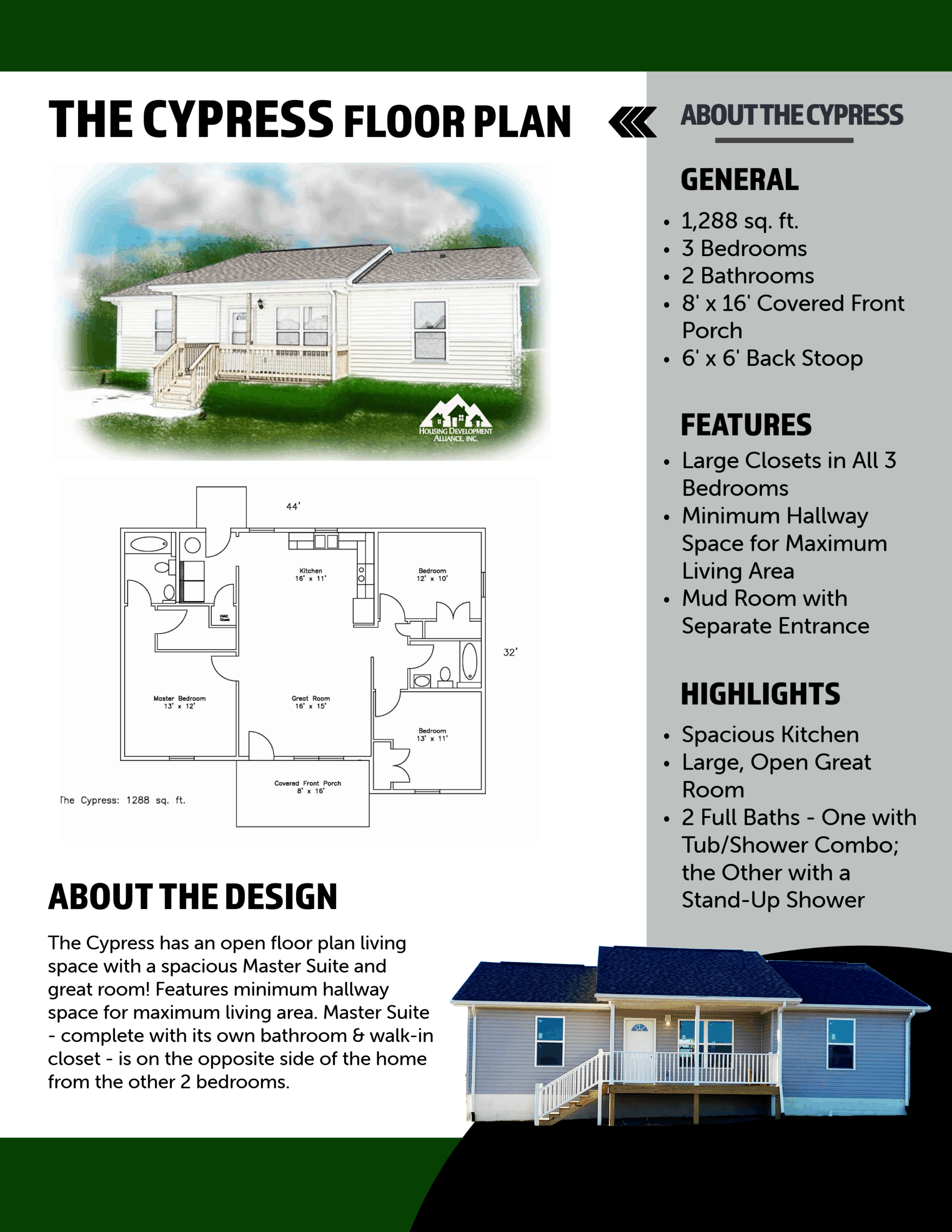
The Cypress has an open floor plan living space with a spacious Master Suite and great room! Features minimum hallway space for maximum living area. Master Suite - complete with its own bathroom & walk-in closet - is on the opposite side of the home from the other 2 bedrooms.
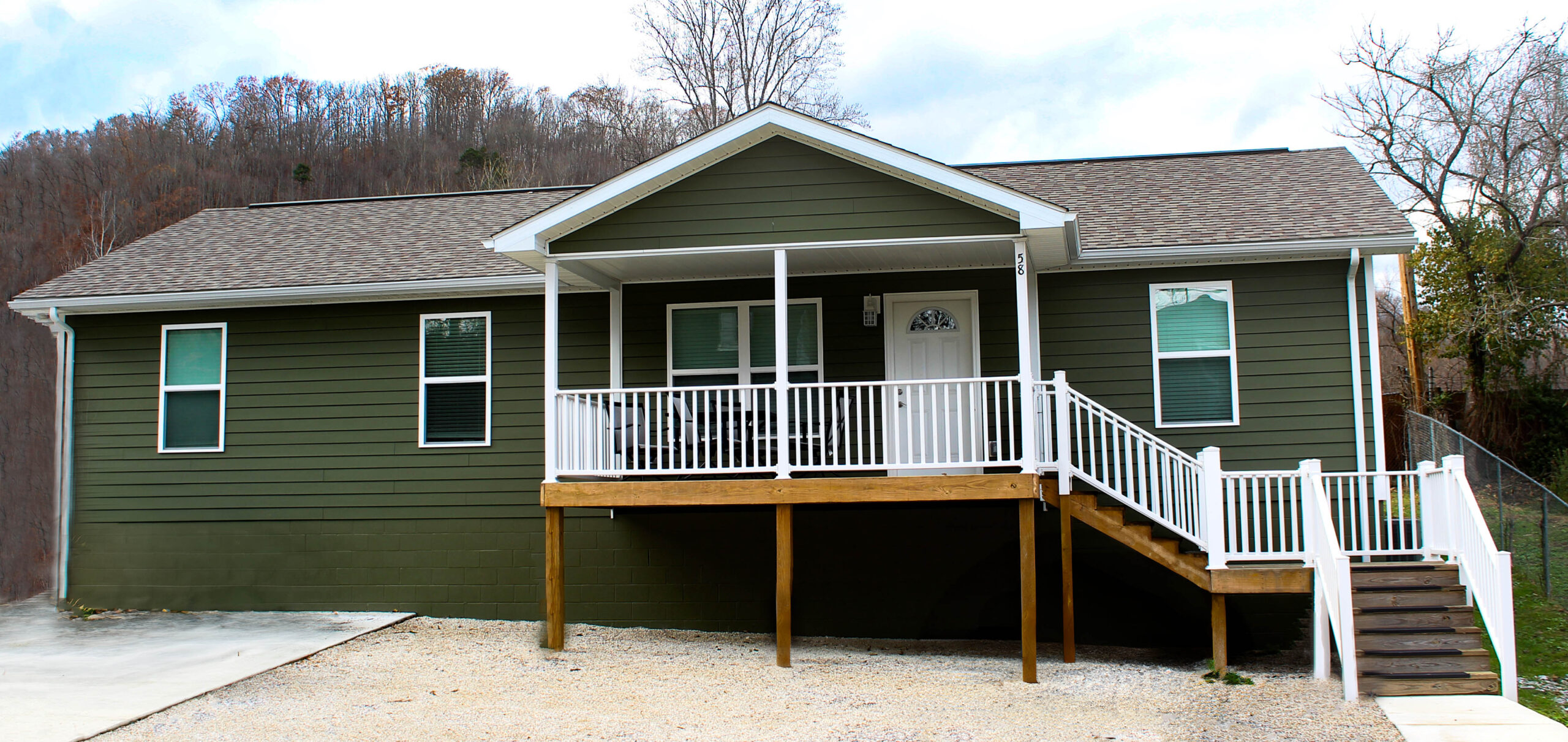
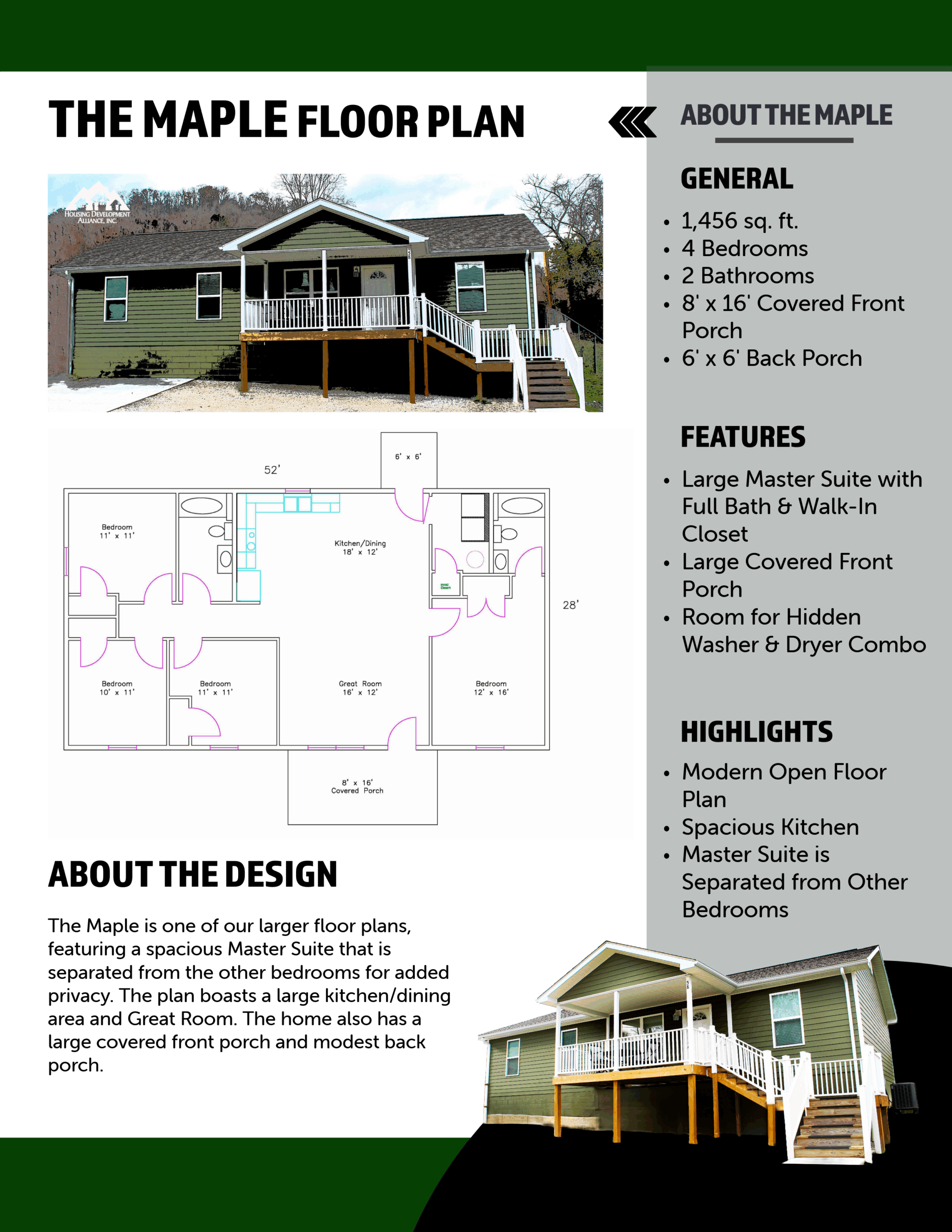
The Maple is one of our larger floor plans, featuring a spacious Master Suite with a full bath that is separated from the other bedrooms for added privacy. The plan boasts a large kitchen/dining area and Great Room. The home also has a large, covered front porch and modest back porch.

This modest floor plan makes use of every square foot! It features a spacious great room, large kitchen, a large full bath, and roomy closets.

The Francis has an attractive front elevation that opens into a large great room. This home can be a traditional 26' floor plan or a more modern, open floor plan.

Featuring a popular open concept design, the Stacy Open boasts a large living space, with the living room seamlessly connected to the dining area, which creates a large airy space with minimal wall barriers, maximizing the feeling of spaciousness. The home has 4 separate bedrooms, with the Master Suite set away from the other bedrooms, offering privacy & ample sleeping space for a larger family.
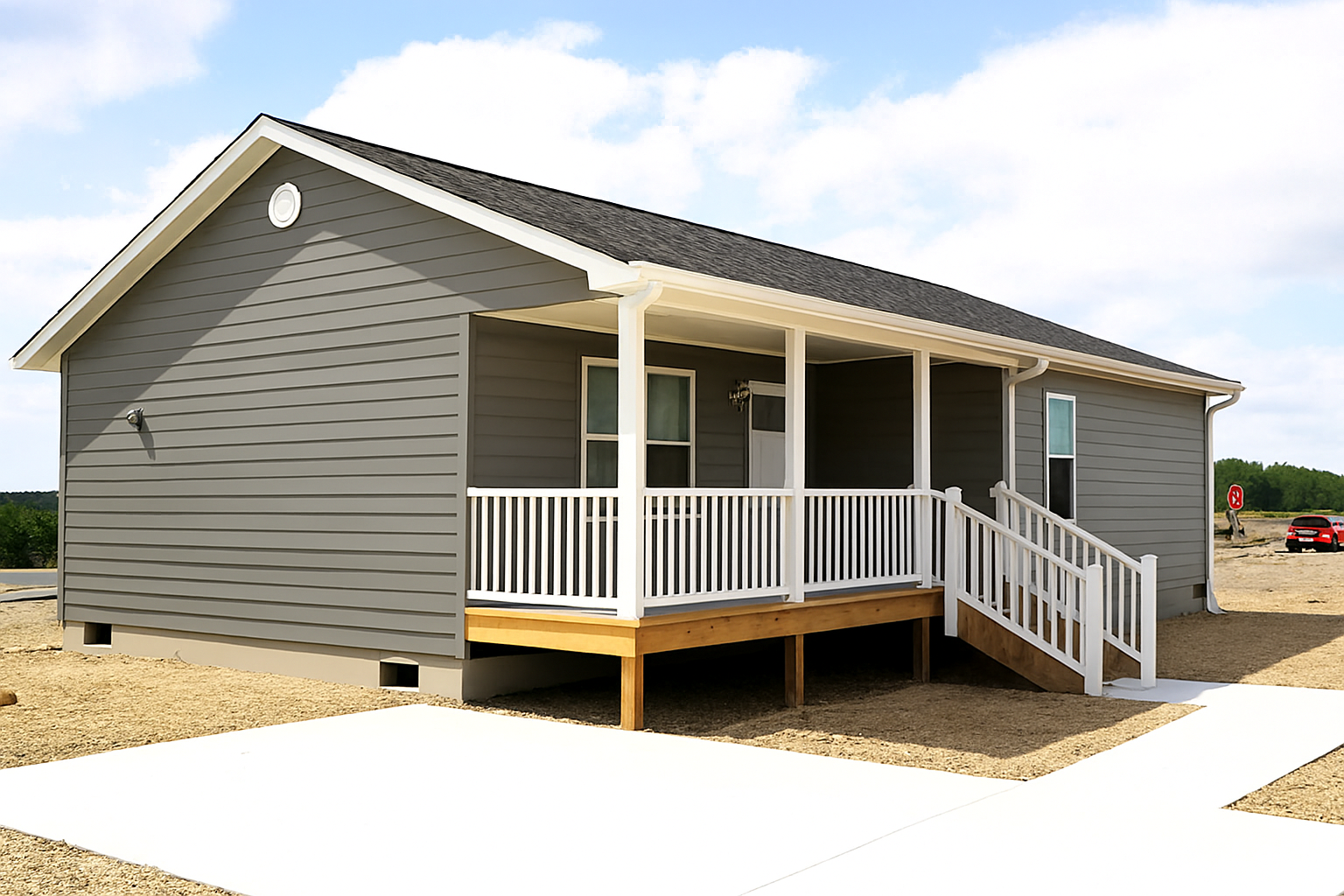
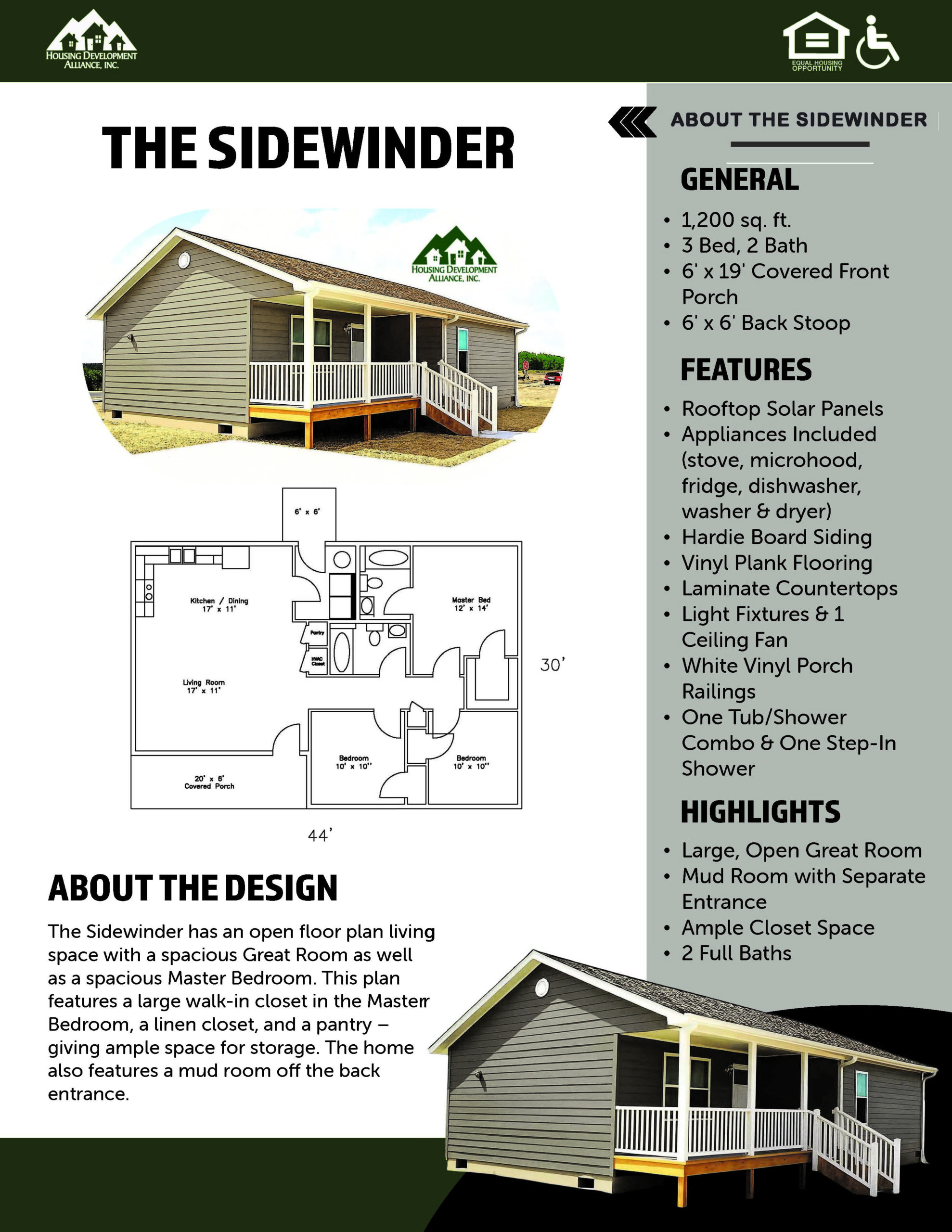
The Sidewinder has an open floor plan living space with a spacious Great Room as well as a spacious Master Bedroom. This plan features a long walk-in closet in the Master Bedroom, a linen closet, and a pantry - giving ample space for storage. The home also features a mud room off the back entrance.

Exploring floor plans is often the first step toward homeownership. If you’re interested in owning an HDA home – or want to learn whether you may be eligible – we’re here to help.
1. Is there a cost for home repairs?
Yes – but repairs are made affordable. Most homeowners receive a combination of grants and low-interest loans based on income, household size, and the type of repair needed. We will explain all costs before any work begins.
2. Do I have to own my home to qualify?
Yes. The home must be owner-occupied, meaning you own the home and live in it. We are not able to repair homes you plan to move into or homes owned by someone else.
3. What kinds of repairs can you help with?
We focus on critical health and safety repairs, accessibility improvements, and major home rehabilitations. This can include roofs, floors, plumbing, electrical issues, ramps, HVAC (through a subcontractor), and more. Cosmetic repairs are generally not eligible.
4. How long will it take to hear back after I get started?
Due to high demand – especially following recent flood disasters – response and wait times are longer than usual. After you submit the Get Started form, our staff will contact you when your request reaches the next step. We appreciate your patience.
5. Why are there two forms?
We use two forms to make the process easier and more efficient for homeowners. The Get Started form is a short first step that lets us understand your situation and determine which repair programs may be a good fit. After reviewing that information, an HDA staff member will contact you to talk through next steps. The Home Repair Intake form is the full application and collects detailed information needed to determine eligibility and funding options. Most people begin with Get Started – our team will help you from there.
6. Does flooding affect my eligibility?
We assist homeowners who were affected or impacted by flooding, whether repairs are flood-related or not. Flood-related needs may qualify for specific funding sources, but all requests are reviewed individually.
Please fill out this contact form and let us know what kind of help you need. A member of our staff will contact you ASAP.
"*" indicates required fields
Thank you for your interest in volunteering with the Housing Development Alliance (HDA)!
This form is the first step to serving with us through either our Traditional Volunteer Program (Hands to Homes) or our Ultimate House Raising Challenge, a signature part of our Hands to Homes initiative.
Once you submit this interest form, our Volunteer & Community Coordinator will follow up to discuss next steps, available dates, and required forms.
Individuals & local volunteers:
If you’re interested in volunteering on your own or as part of a small local group, you’re welcome to continue using this form. You may also contact our Volunteer & Community Coordinator directly at 606-436-0497 or janie@hdahome.org
Our Volunteer & Community Coordinator typically responds within one week. If you have not heard from us after submitting this form, please call 606-436-0497.
Please note: This is an interest form only. Additional forms and confirmations are required before volunteering is finalized.
"*" indicates required fields