Donate Now & Help Build What Lasts!

The Need

Why Affordable Housing Matters in Eastern Kentucky

Housing markets in Eastern Kentucky do not function like typical American housing markets. Decades of economic decline, persistent poverty, and structural disinvestment have produced a region where affordable, quality housing is scarce even as need remains high.

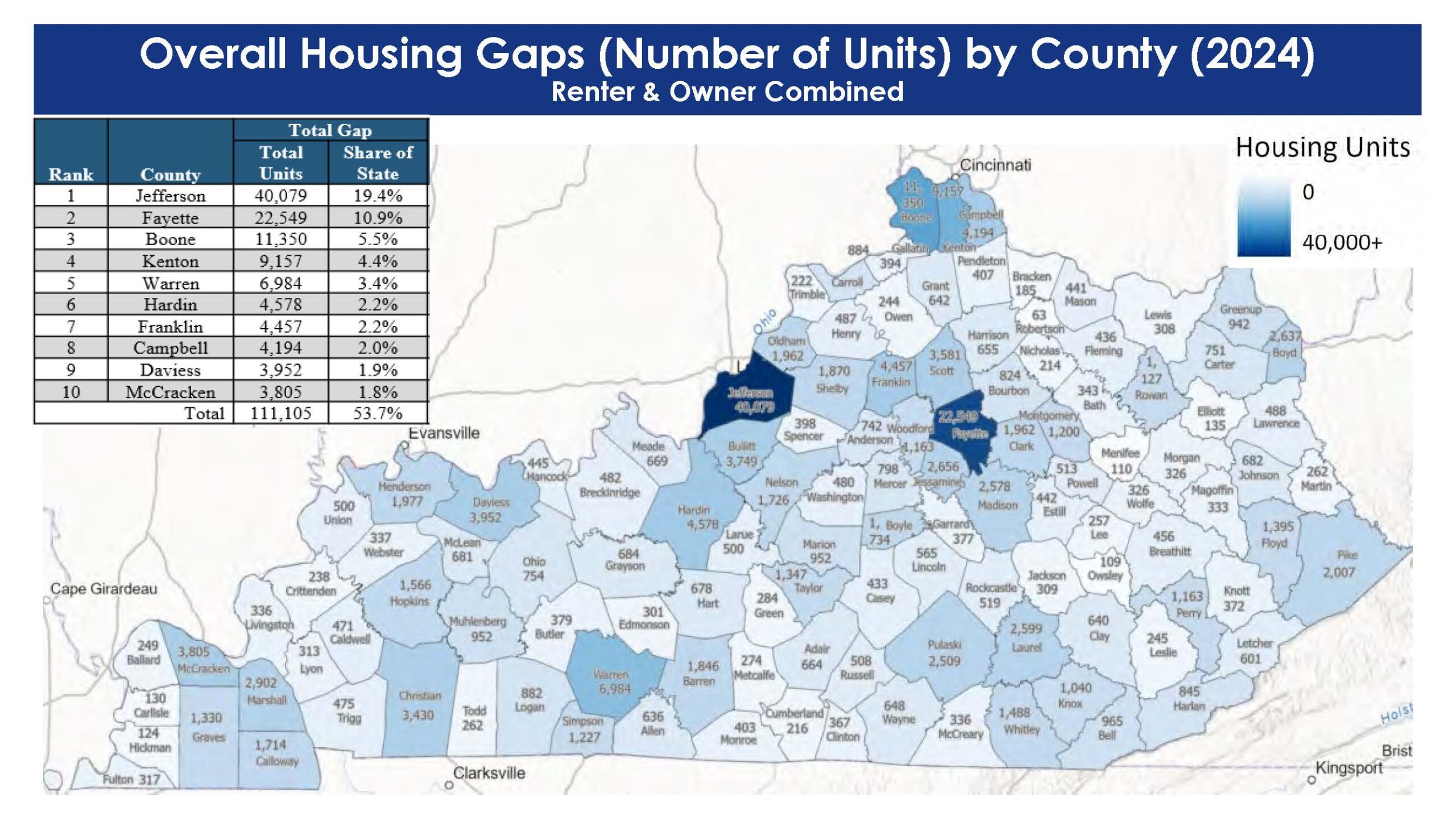
Courtesy of Kentucky Housing Corporation
Click the image to enlarge

Below are key factors driving the need for sustained affordable housing development and preservation in the region.

High Poverty and Low Income Compared to State and Nation

Poverty rates in Eastern Kentucky are significantly higher than state and national averages.

• Kentucky’s overall poverty rate is about 15.6%, higher than the national rate.
• In many Eastern Kentucky counties, poverty rates exceed 30%, including in Breathitt and Leslie counties.
• Rural Appalachian counties - similar in economic structure to Eastern Kentucky - had poverty rates near 20%, compared with 15.4% in rural counties nationwide.

Income disparities compound the problem:

• Median household incomes in Appalachian Kentucky are well below national and many state levels.
• Across the broader Appalachian region, median household income is roughly 85% of the U.S. median, even after recent improvements.

Lower incomes translate directly into constrained housing demand and limited purchasing power, which affects both rental and for-sale markets.

Structural Housing Market Challenges

Lack of Housing Supply

Kentucky faces a statewide shortage of housing units, including both rental and ownership opportunities. According to the Kentucky Association of Counties, the state has an estimated housing gap of over 200,000 units – split roughly equally between rental and for-sale homes.

Rural markets like Eastern Kentucky are particularly affected because:

  • Low incomes depress both rent and resale values.

  • Low appraisal values can make new construction financially unviable.

  • Scattered population and limited public investment reduce market incentives for private development.

Aging and Under-Valued Housing Stock

Housing in many Eastern Kentucky communities is older and often needs significant repairs. Lower valuations also limit access to financing for rehabilitation.

While detailed county-level housing condition data is limited, broader Appalachian statistics show:

  • A large share of housing units were built before 1960, a proxy for aging stock needing maintenance or replacement.

Affordability Stress

When housing costs absorb a disproportionate share of household income, families sacrifice basic needs.

Regionwide rural data indicate:

  • A significant share of households spend over 30% of income on rent.

This affordability pressure is especially acute for low-income households who have limited options and limited upward mobility.

Economic Dislocation and Labor Market Shifts

Eastern Kentucky’s traditional economic base – particularly coal mining – has declined sharply over the past several decades. While recent economic data show gradual diversification and workforce participation improvements, structural weaknesses remain.

Long-term economic trends include:

  • Persistent displacement of coal jobs without equivalent industry replacement. The region has lost over 30,000 coal jobs in the last 30 years. Reports from Feb 2026 indicate that Eastern Kentucky and West Virginia lost more than 1,600 coal jobs combined since the beginning of 2025, with continued layoffs. In Perry County, KY, for example, which is where our office is located, more than 25% of county workers were employed by the coal industry in 1988. Today, only a bit over 8.5% are.

  • Slower income growth relative to more urban or diversified economies.

  • Rural populations aging faster than national averages.

These labor market dynamics reduce local purchasing power and further pressure the housing market.

A Regional Snapshot - What This Means for Housing

Taken together, these conditions create a housing market characterized by:

  • High poverty and low incomes that suppress demand power

  • Structural housing shortages with not enough units to meet need

  • Aging, under-valued housing stock that is difficult to finance and sustain

  • Affordability stress that strains low-income household budgets

  • Economic dislocation that reduces local investment and housing market growth

Affordable, quality housing is not just a social need – it is foundational to regional economic stability and household resilience.

Why This Matters

Without targeted investment and development:

  • Families will continue to face unstable housing.

  • Local economies will struggle to retain and attract workforce.

  • Disparities in health, education, and economic opportunity will persist.

Affordable housing is not just shelter – it is economic infrastructure. Strengthening housing availability and quality is essential to long-term regional well-being.

Verified by MonsterInsights