


Thinking Differently About Home:
HDA Showcases an Innovative Housing Solution
JACKSON, Ky. (Oct. 21, 2026) – On Oct. 20, Housing Development Alliance, Inc. (HDA) welcomed a small group of housing partners, community leaders, funders, and supporters to Roark Branch near Jackson in Breathitt County for an up-close look at a new idea taking shape in Eastern Kentucky.
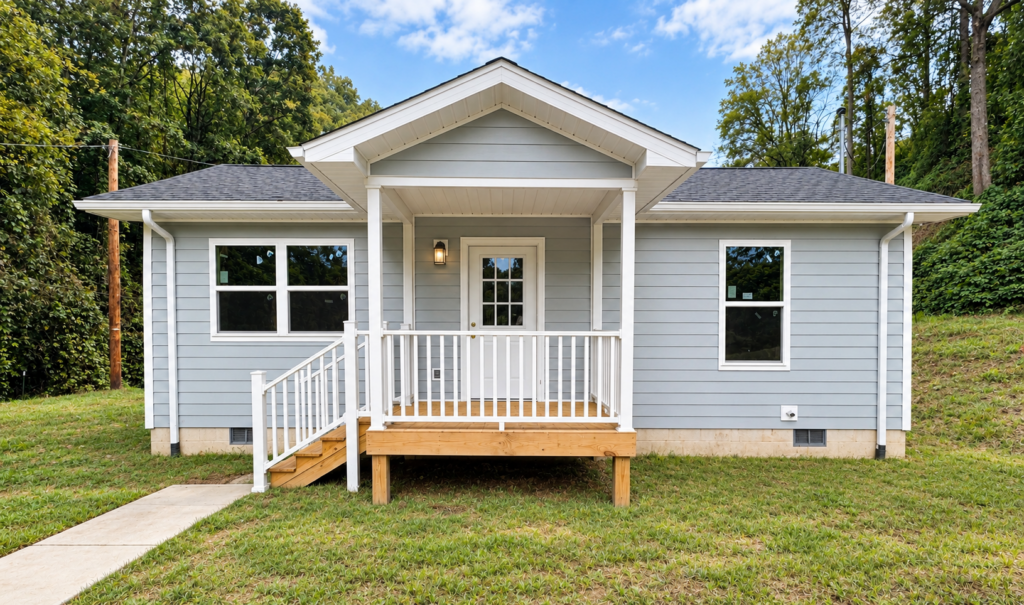
HDA calls the two houses built there its “cottage homes.” At approximately 540 square feet, the one-bedroom, one-bath homes are smaller than HDA’s traditional house plans – but they were designed with a much larger goal in mind: making safe, quality homeownership possible for people with extremely low or fixed incomes.
The project takes its inspiration from a “Tiny House” project in Jacksonville, FL that provided 50 tiny houses – all under 600 square feet – to some of the area’s most vulnerable residents. The Delores Barr Weaver Tiny House Fund at the Community Foundation for Northeast Florida funded that project, and subsequently, the Delores Barr Weaver Legacy Funds supplied the initial support for HDA’s Cottages at Roark Branch.
Further support for the project was granted by the Rural Housing Trust Fund – created by the Kentucky Legislature in response to the 2021 Western Kentucky tornado outbreak and the 2022 Eastern Kentucky floods and administered by the Kentucky Housing Corporation – and USDA Rural Development, which is providing a first mortgage to the first cottage buyer.
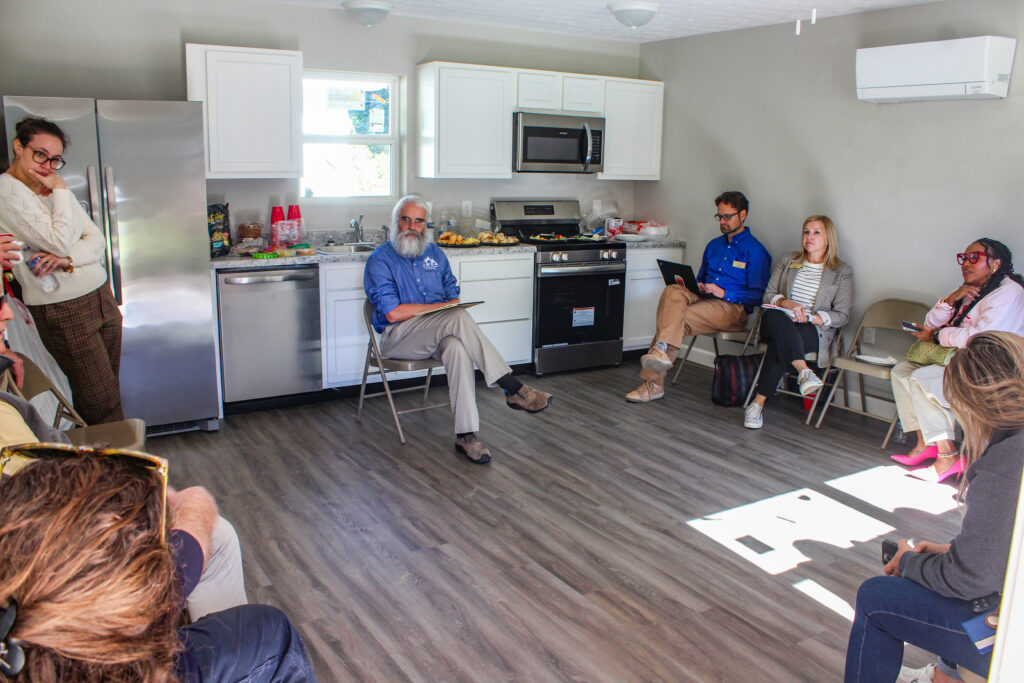
The Oct. 20 event, Housing Innovation in Action, gave guests an opportunity to tour the homes, learn why HDA decided to test a smaller housing model, and discuss what it will take to make more homes like these possible.
“We know there is no single housing model that will work for every person or every family. If we are serious about serving people with extremely low incomes, we have to be willing to question our assumptions, listen carefully, and try new approaches. These homes are not about asking someone to settle for less. They are about creating a safe, quality home that fits the homeowner’s needs and gives that person an opportunity they may not otherwise have.”
-HDA Executive Director Scott McReynolds
A housing gap that demands new thinking
For some Eastern Kentucky households, even a modest traditionally sized new home remains financially out of reach.
This is particularly true for older adults, people living alone, and people whose only income comes from Social Security, disability benefits, or another fixed source. Some have spent years living in older manufactured homes or deteriorating houses because those were the only options they could afford. When flooding, landslides, major repairs, or other circumstances make those homes unlivable, there may be no realistic replacement available.
HDA’s smaller-home pilot asks an important question:
Can a thoughtfully designed, right-sized home create a sustainable path to ownership for someone the conventional housing market leaves behind?
The two houses on Roark Branch are HDA’s first opportunity to begin answering that question.
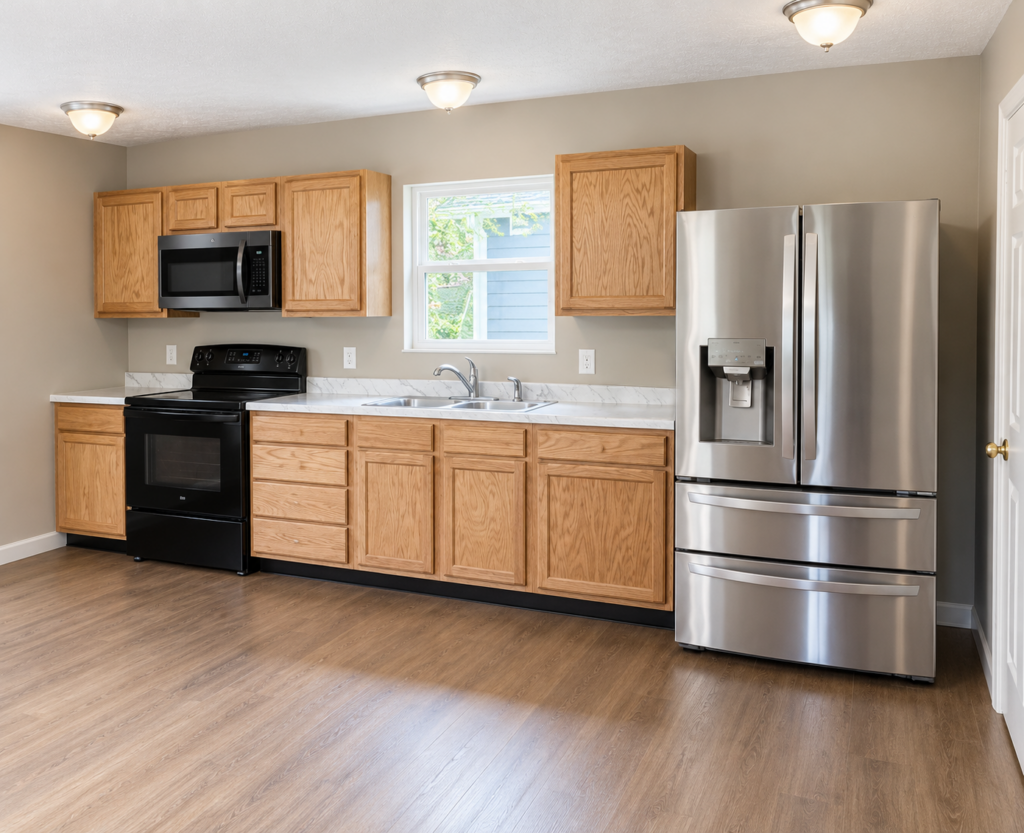
These are not temporary shelters or recreational tiny houses. They are permanent, quality-built homes intended for long-term ownership. Each contains the essential spaces a one-person household needs while avoiding the construction, utility, maintenance, insurance, and property-tax costs associated with space that may not be necessary.
Smaller by design - not smaller in purpose
The purpose of the model is not simply to build the smallest possible house. It is to build the right amount of house for the homeowner while preserving safety, comfort, quality, and dignity.
That distinction matters.
A home can be modest in size and still represent stability, independence, privacy, and a lasting investment. For a household with very limited income, reducing the size and cost of the home may be what transforms ownership from an impossible idea into an attainable one.
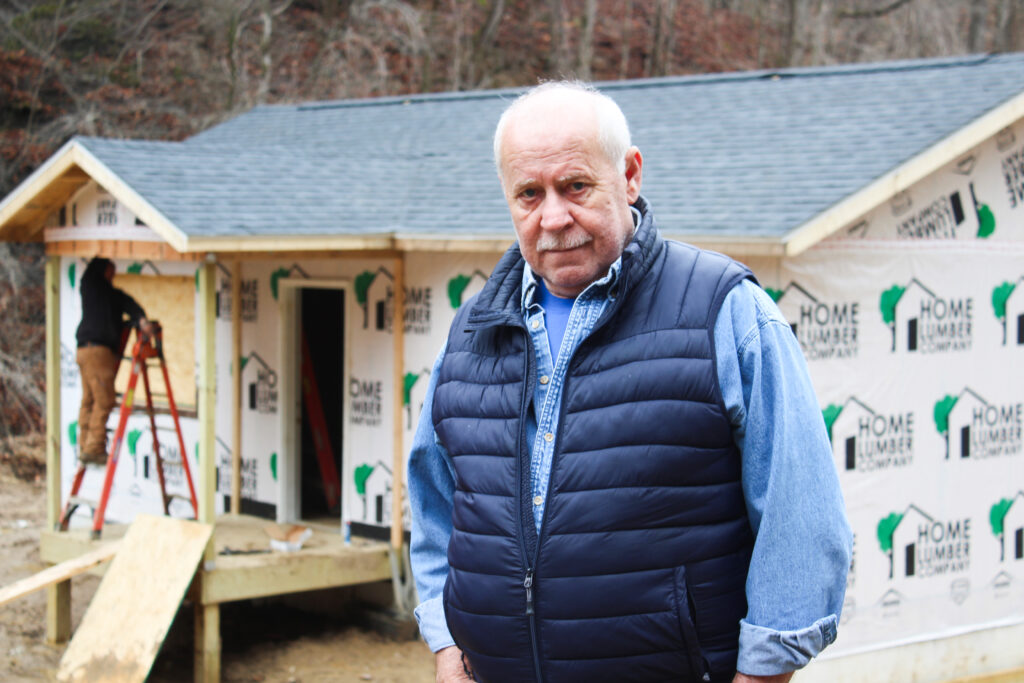
“The house I’m renting now is old and hard to heat,” David Leveridge said. “I’ve lived there 30 years. It’s a 5-room house, but I only use two rooms of it. I was scared to own a house, but I’m glad I finally went ahead and applied. It’ll be a good, solid home, and it’ll be mine.”
Learning through collaboration
Guests were invited to consider the opportunities presented by the model as well as the practical questions that remain. Conversations within the group included how the homes can be financed, how suitable sites can be identified and prepared, how infrastructure costs affect affordability, and how public and philanthropic funding can bridge the gap between the cost of construction and what a homebuyer can reasonably afford.
During the discussion, guests raised several important considerations:
- Guests quickly connected the cottage model to people they know who have few realistic housing options. State Representative Chris Fugate said he knows several people who could benefit from a home like this, while Jackson Mayor Laura Thomas expressed interest in seeing cottages developed within the city. The response suggested that the need is not hypothetical: community leaders can already identify people and places for whom this model could make sense.
- The conversation also expanded beyond a single approach to homeownership. Guests encouraged HDA to consider whether cottages could help address the shortage of safe, quality rental housing, while others explored ownership structures that could preserve both the homeowner’s family legacy and the home’s long-term affordability. Their feedback underscored that housing innovation is not only about the structure itself – it is also about developing financing and ownership options that reflect what different households actually need.
- Guests were also struck by the appearance and quality of the homes. Kentucky Housing Corporation Deputy Executive Director Wendy Smith called them “lovely and attractive,” and attendees responded enthusiastically to describing them as cottages rather than “not-so-tiny homes.” The reaction highlighted an important lesson for HDA: the way the homes look – and the language used to introduce them – can shape whether prospective buyers, neighbors, and funders recognize them as desirable, permanent homes.
The cottages’ appeal may lie not only in their lower development cost, but also in their ability to offer an attractive, energy-efficient alternative to the limited housing choices currently available to smaller households. That input will help HDA evaluate the first two homes and strengthen the model before pursuing future construction.
"I love them (the cottages), and honestly, they are definitely not what I would consider 'tiny homes.' They are beautifully built, have gorgeous finishes, and are priced really well. If I were a single woman, I would be moving to Jackson! I think this project is a great example of how affordable housing can still offer quality, style, and a place people are proud to call home." - Sade Wells, Relationship Manager for Fahe's JustChoice Lending
From a pilot to a possibility
Two homes alone will not solve Eastern Kentucky’s housing shortage. They can, however, help HDA and its partners learn what is possible.
The Roark Branch cottages allow HDA to examine the real costs, financing needs, design considerations, and homeowner experience associated with a smaller model. Just as importantly, they give funders and community partners something tangible to see, question, and improve.
That process is central to HDA’s work. Innovation does not mean arriving with every answer already in hand. It means recognizing where existing approaches fall short, trying something different, listening to the people most affected, and using what is learned to build a better response.
Help build what comes next!
HDA is now considering how a cottage model could become part of a broader range of housing options for Eastern Kentucky.
Future homes will require collaboration. Site development, infrastructure, construction, financing, and homebuyer affordability all have to work together. Public agencies, financial institutions, philanthropic funders, local governments, donors, and community partners each have a potential role.
For supporters, the opportunity is not merely to fund a smaller house. It is to help create a new path to safe, sustainable homeownership for people whom the housing market too often overlooks.
"There seems to be no option for my generation - the older generation. With current rent prices plus the cost of electricity, there's absolutely no way for some of us to afford housing. As an older, single person living on a fixed income, there's no option for me other than the housing projects that have years' long waiting lists."
- Carol Mullins (from a Facebook post comment)
"We definitely need something like this [the cottages] for people like me who don’t currently have income and (are) disabled, still trying to get disability, and not able to work, leaving us without any income."
- Sue Webb (from a Facebook post comment)
Interested in helping HDA build the next cottage? Contact Mindy Miller, Director of Development & Communications, by emailing mindy@hdahome.org or calling 606-436-0497.
