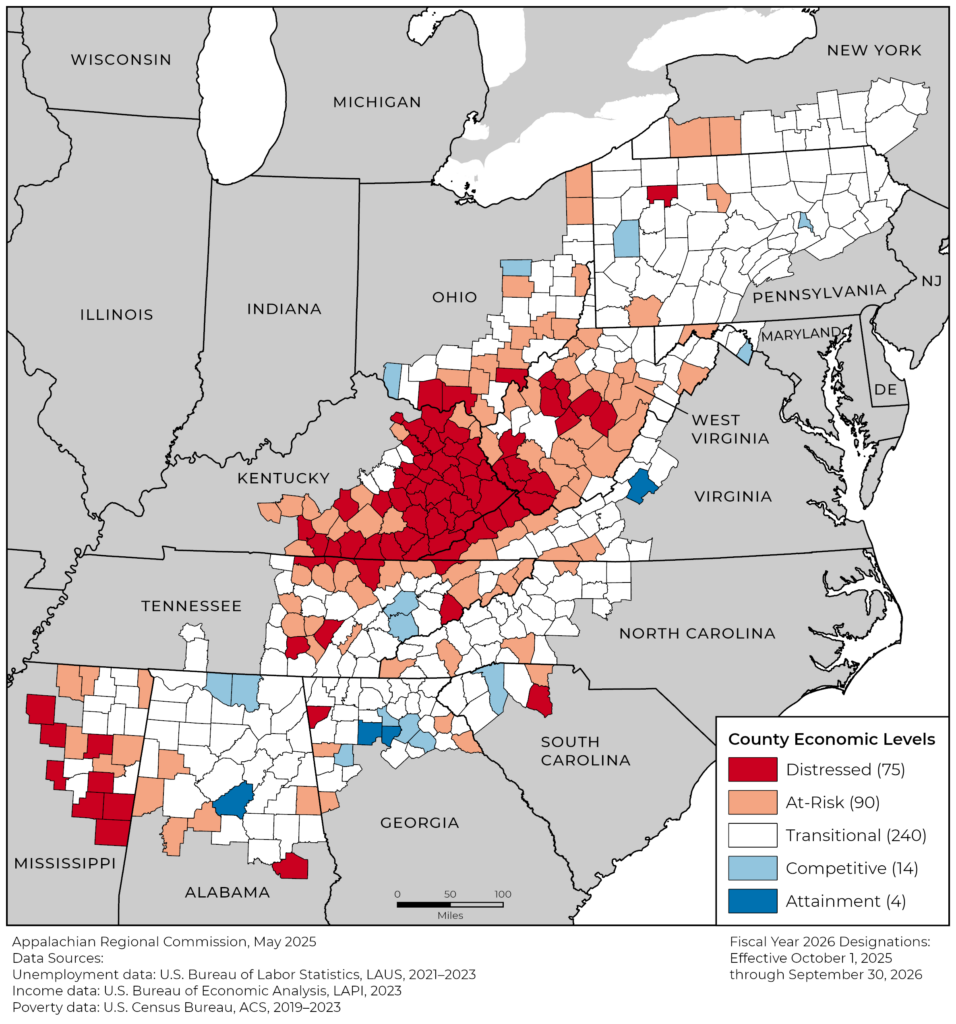
Housing markets in Eastern Kentucky do not function like typical American housing markets. Decades of economic decline, persistent poverty, and structural disinvestment have produced a region where affordable, quality housing is scarce even as need remains high.
Below are key factors driving the need for sustained affordable housing development and preservation in the region.

Poverty rates in Eastern Kentucky are significantly higher than state and national averages.
• Kentucky’s overall poverty rate is about 15.6%, higher than the national rate.
• In many Eastern Kentucky counties, poverty rates exceed 30%, including in Breathitt and Leslie counties.
• Rural Appalachian counties - similar in economic structure to Eastern Kentucky - had poverty rates near 20%, compared with 15.4% in rural counties nationwide.
Income disparities compound the problem:
• Median household incomes in Appalachian Kentucky are well below national and many state levels.
• Across the broader Appalachian region, median household income is roughly 85% of the U.S. median, even after recent improvements.
Lower incomes translate directly into constrained housing demand and limited purchasing power, which affects both rental and for-sale markets.
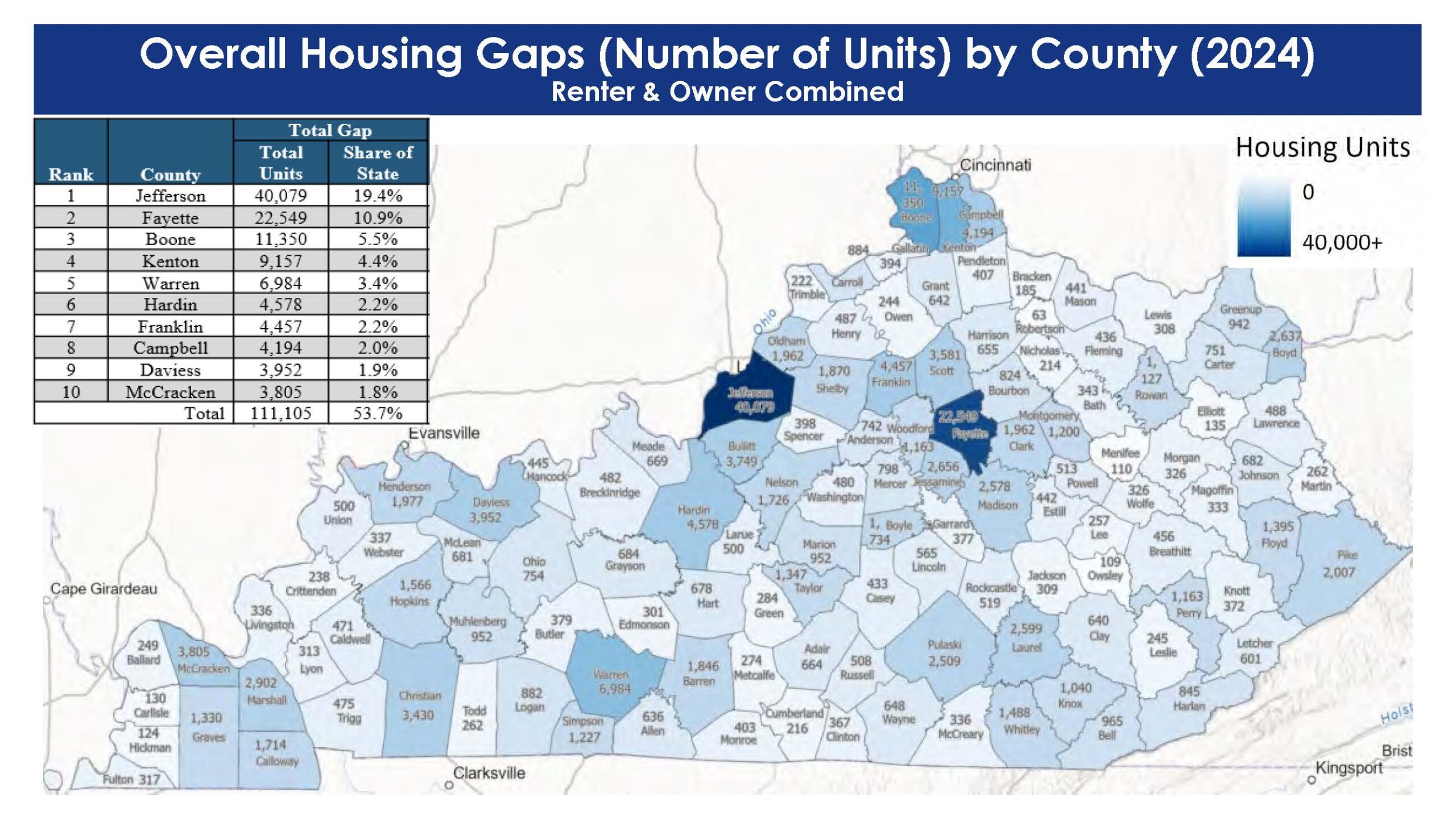
Kentucky faces a statewide shortage of housing units, including both rental and ownership opportunities. According to the Kentucky Association of Counties, the state has an estimated housing gap of over 200,000 units – split roughly equally between rental and for-sale homes.
Rural markets like Eastern Kentucky are particularly affected because:
Low incomes depress both rent and resale values.
Low appraisal values can make new construction financially unviable.
Scattered population and limited public investment reduce market incentives for private development.
Housing in many Eastern Kentucky communities is older and often needs significant repairs. Lower valuations also limit access to financing for rehabilitation.
While detailed county-level housing condition data is limited, broader Appalachian statistics show:
A large share of housing units were built before 1960, a proxy for aging stock needing maintenance or replacement.
When housing costs absorb a disproportionate share of household income, families sacrifice basic needs.
Regionwide rural data indicate:
A significant share of households spend over 30% of income on rent.
This affordability pressure is especially acute for low-income households who have limited options and limited upward mobility.
Eastern Kentucky’s traditional economic base – particularly coal mining – has declined sharply over the past several decades. While recent economic data show gradual diversification and workforce participation improvements, structural weaknesses remain.
Long-term economic trends include:
Persistent displacement of coal jobs without equivalent industry replacement. The region has lost over 30,000 coal jobs in the last 30 years. Reports from Feb 2026 indicate that Eastern Kentucky and West Virginia lost more than 1,600 coal jobs combined since the beginning of 2025, with continued layoffs. In Perry County, KY, for example, which is where our office is located, more than 25% of county workers were employed by the coal industry in 1988. Today, only a bit over 8.5% are.
Slower income growth relative to more urban or diversified economies.
Rural populations aging faster than national averages.
These labor market dynamics reduce local purchasing power and further pressure the housing market.
Taken together, these conditions create a housing market characterized by:
High poverty and low incomes that suppress demand power
Structural housing shortages with not enough units to meet need
Aging, under-valued housing stock that is difficult to finance and sustain
Affordability stress that strains low-income household budgets
Economic dislocation that reduces local investment and housing market growth
Affordable, quality housing is not just a social need – it is foundational to regional economic stability and household resilience.
Without targeted investment and development:
Families will continue to face unstable housing.
Local economies will struggle to retain and attract workforce.
Disparities in health, education, and economic opportunity will persist.
Affordable housing is not just shelter – it is economic infrastructure. Strengthening housing availability and quality is essential to long-term regional well-being.
1. Is there a cost for home repairs?
Yes – but repairs are made affordable. Most homeowners receive a combination of grants and low-interest loans based on income, household size, and the type of repair needed. We will explain all costs before any work begins.
2. Do I have to own my home to qualify?
Yes. The home must be owner-occupied, meaning you own the home and live in it. We are not able to repair homes you plan to move into or homes owned by someone else.
3. What kinds of repairs can you help with?
We focus on critical health and safety repairs, accessibility improvements, and major home rehabilitations. This can include roofs, floors, plumbing, electrical issues, ramps, HVAC (through a subcontractor), and more. Cosmetic repairs are generally not eligible.
4. How long will it take to hear back after I get started?
Due to high demand – especially following recent flood disasters – response and wait times are longer than usual. After you submit the Get Started form, our staff will contact you when your request reaches the next step. We appreciate your patience.
5. Why are there two forms?
We use two forms to make the process easier and more efficient for homeowners. The Get Started form is a short first step that lets us understand your situation and determine which repair programs may be a good fit. After reviewing that information, an HDA staff member will contact you to talk through next steps. The Home Repair Intake form is the full application and collects detailed information needed to determine eligibility and funding options. Most people begin with Get Started – our team will help you from there.
6. Does flooding affect my eligibility?
We assist homeowners who were affected or impacted by flooding, whether repairs are flood-related or not. Flood-related needs may qualify for specific funding sources, but all requests are reviewed individually.
Please fill out this contact form and let us know what kind of help you need. A member of our staff will contact you ASAP.
"*" indicates required fields
Thank you for your interest in volunteering with the Housing Development Alliance (HDA)!
This form is the first step to serving with us through either our Traditional Volunteer Program (Hands to Homes) or our Ultimate House Raising Challenge, a signature part of our Hands to Homes initiative.
Once you submit this interest form, our Volunteer & Community Coordinator will follow up to discuss next steps, available dates, and required forms.
Individuals & local volunteers:
If you’re interested in volunteering on your own or as part of a small local group, you’re welcome to continue using this form. You may also contact our Volunteer & Community Coordinator directly at 606-436-0497 or janie@hdahome.org
Our Volunteer & Community Coordinator typically responds within one week. If you have not heard from us after submitting this form, please call 606-436-0497.
Please note: This is an interest form only. Additional forms and confirmations are required before volunteering is finalized.
"*" indicates required fields